
Nikro Air Duct Cleaning in Hollywood: A Homeowner’s Guide
Most homeowners in Hollywood recognize a vacuum truck when they see one. What they can’t see is whether that machine is actually collecting what it loosens inside the ducts, or just stirring it into the air they breathe. The equipment doing the work behind the register is the part nobody inspects, and it’s the part that decides whether a cleaning job helps or just makes dust for a day. Here’s what the Nikro name means inside a duct system, in plain terms.
What is negative air duct cleaning, and why does it matter?
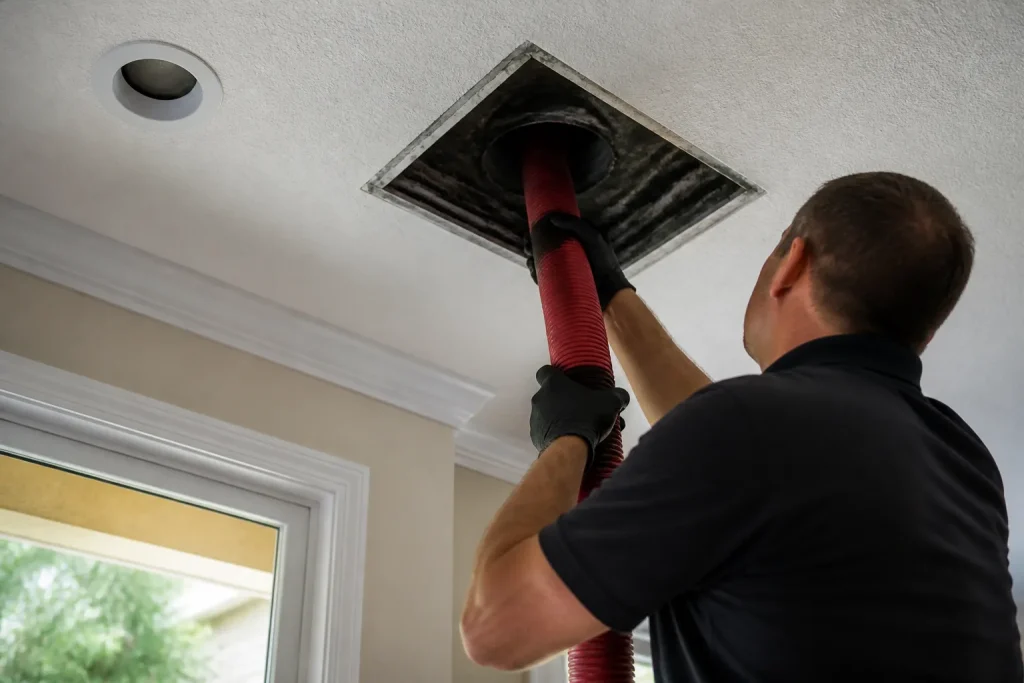
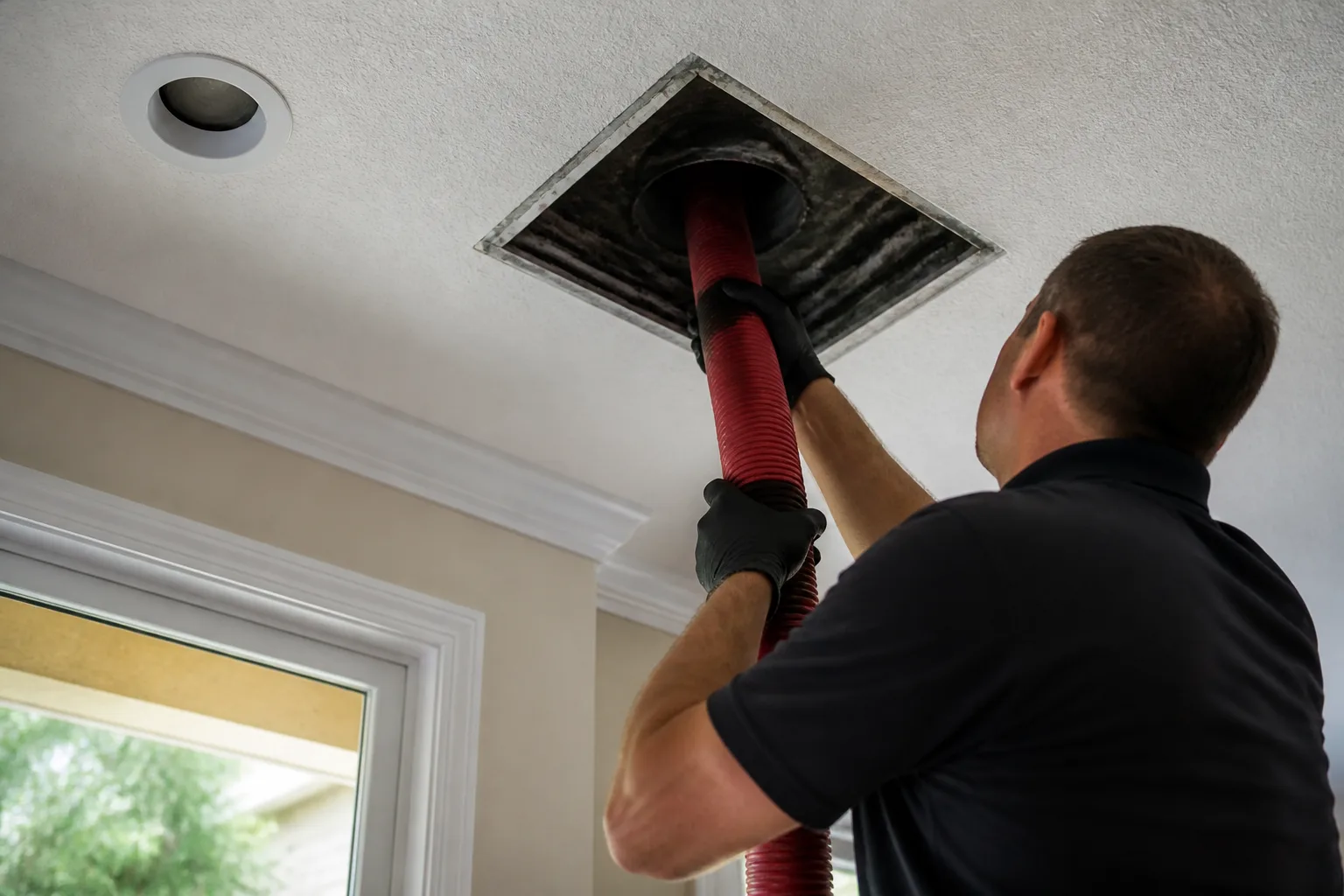
Negative air duct cleaning uses a high-powered machine to lower the pressure inside the duct system so that loosened debris moves toward the collection point instead of leaking into your living space. The machine pulls air through a HEPA filter while a technician works on the ducts from the other end, and the whole point is that contamination travels one direction: into the collector. In a Hollywood home, that one-way flow is the difference between a cleaning and a dust event.
Think about how a normal household vacuum behaves. It lifts what’s on the surface, then the exhaust blows fine particles back out behind it. A shop vac in a duct opening does the same thing, except the particles it’s blowing out are whatever has settled on the duct walls over years. Mold spores, insulation fibers, pet dander, and rodent particulate all become airborne. If your system recirculates, some of that gets pulled right back into the supply.
Nikro extraction equipment is built around a different idea. The unit is engineered for HEPA-filtered negative air containment, which means the pressure differential is the tool. Debris is drawn toward the machine, captured, and held. Nothing gets pushed through a bedroom. In our experience, homeowners in Hollywood with flexible duct systems notice the result fastest, because flex duct has more surface area and more crevices for debris to cling to than rigid metal.
Why HEPA filtration at the machine matters, not just at the register
HEPA filtration at the collection machine captures sub-micron particles, including mold spores and fine insulation fibers, before they ever exit the equipment. A filter at the register or the return only catches what happens to pass through it. The machine is where the air actually gets processed, so the filter belongs there.
A standard filter bag will stop hair, chunks, and larger dust. It won’t reliably stop a mold spore, which is measured in microns, not in visible specks. When a duct system has any history of moisture, and in Hollywood’s humid summers that’s most of them, mold spores are a real concern. So are fiberglass fibers from lined ductwork. Neither is something you want drifting across a living room while the crew works.
This is the reason remediation contractors use HEPA-filtered negative air machines rather than shop vacs. Abatement Technologies builds the same class of equipment for indoor air quality and abatement work. The tooling standard is the same whether the job is a duct system or a structural remediation: contain the contamination, filter the air, don’t release it.
A few things that come out of that standard on a real job:
- Air is filtered at the machine, not at the register or return vent
- Dislodged debris stays in the collection system rather than recirculating
- The living space stays breathable during the work, which matters if anyone in the house has allergies or asthma
- Containment is maintained for the whole job, not just the loud part
Contact cleaning vs. negative air: how they combine
Contact cleaning and negative air work are complementary, not competing. Contact cleaning uses a rotating brush system, the Rotobrush, to physically agitate and scrub debris off duct wall surfaces. Negative air creates the pressure differential that pulls that loosened material into the collection point. One scrubs; the other captures. Run either one alone and you leave half the job undone.
Here’s how the two pieces divide up across common duct types in a Hollywood home:
- Rigid metal duct (common in older construction): the Rotobrush brush head handles the wall contact, and negative air does the extraction. This is the combination that gets the most out of a metal system.
- Flex duct (common in newer and retrofit construction): the inner liner is thin and can be torn by aggressive brushing. The brush pressure gets dialed down or the method shifts toward negative air extraction with gentler agitation. This is where a crew that owns a Nikro unit but doesn’t adjust its approach does real damage.
- Fiberglass-lined duct: lined duct has an exposed insulation surface inside the airstream, which traps fibers and debris and tears easily. The technique leans heavily on controlled negative air extraction, with the brush used lightly and only where the liner can take it.
Rotobrush handles the physical contact. Nikro handles the capture. A crew running both together gets a duct system that’s actually scrubbed and actually evacuated. A crew running only one is solving half the problem.
Why flex duct needs a gentler hand, and where equipment choice shows
Flex duct tears more easily than any other duct type, and a torn inner liner turns a cleaning into a repair job. The liner is a thin membrane over a wire coil. A brush spinning at full pressure can catch a seam and pull it loose, which then creates a rough surface where debris collects for years afterward. In our experience, this is one of the most common avoidable problems we run into on repair calls in Hollywood: a liner that was damaged during a cleaning and never noticed until airflow dropped.
The equipment matters here for a specific reason. Nikro units let a technician dial in the airflow and containment so the extraction does the heavy lifting on flex duct, and the brush is used at reduced pressure. A shop vac in the same duct has no adjustment and no HEPA stage. It blows dust out of the exhaust and pulls on the liner at the same time. Neither outcome helps.
This is the practical advantage of remediation-grade equipment on flex duct: the work is controllable. You can scrub what needs scrubbing and extract what needs extracting without turning the liner into a casualty. It’s the difference between service that’s tuned to the duct type and service that just points one tool at every system.
How to verify a contractor is actually using negative air methodology
Owning Nikro or Rotobrush equipment and using negative air methodology are not the same thing. Any company can list a brand name in its marketing and still run the job like a vacuuming service. Homeowners in Hollywood who want to verify the work should ask specific questions before the job starts.
Here are the questions we’d want answered if we were hiring the work out:
- Is the collection machine HEPA-filtered? Ask to see the filtration stage. A filter bag is not a HEPA filter.
- Where does the exhaust air go? If the answer is “into the room,” the machine isn’t containing anything.
- How will you adjust for flex duct? A crew that plans to run the same brush pressure on every duct type hasn’t thought it through.
- Will the brush actually contact the duct walls? A vacuum wand that gets pushed through the opening doesn’t scrub anything. Contact cleaning requires physical contact.
- Are you doing the supply and return runs, or just the visible openings? The whole system is the scope, not the vent you can see from the living room.
We’ve seen contractors show up with a shop vac and a wand and call it a cleaning. The tell is usually the exhaust: if you can smell the dust in the room while the work is happening, the containment isn’t there. A properly run negative air job shouldn’t make the air worse before it makes it better.
When to call a pro
If you’re comfortable pulling a register and looking at the inside of a duct, do that much yourself. If you see visible debris buildup, a torn liner, a strong musty smell, or airflow that’s noticeably weaker than last year, that’s past the point where a homeowner can address it alone. Rodent activity in the ducts and mold growth inside the system both need professional extraction with containment. Same for anything that touches the electrical side of your HVAC system.
Duct repair is its own category. Cleaning won’t fix a disconnected run, a crushed flex segment, or a liner that was damaged on a previous job. That’s a diagnostic question before it’s a cleaning question, which is why our air duct cleaning service and our repair work are handled as separate assessments. If the ducts are compromised, cleaning them alone doesn’t help.
Nickel-and-dime repairs aside, there’s one other piece of the system worth checking: the dryer vent. A clogged dryer vent is a documented fire risk, not a minor housekeeping item. Our dryer vent cleaning work is the same equipment and the same standard, aimed at a different duct. If your system also runs filtration or air treatment equipment, we work with Honeywell, Aprilaire, and Guardsman systems, so the whole setup gets treated as one system rather than three separate parts.
If you’re in Hollywood and you’d rather not work through this alone, the team at Hollywood Duct Cleaning handles all three service lines and can answer the equipment questions above on the call. Call (866) 361-9843 for a free estimate.
The Bottom Line
Nikro equipment matters because the machine is where the contamination actually gets captured. A high-powered vacuum without HEPA filtration and proper containment can loosen debris without collecting it. A combined approach uses the Rotobrush to scrub duct wall surfaces and the Nikro unit to pull the dislodged material into a HEPA-filtered collection point. On flex duct and fiberglass-lined systems, that distinction is the difference between a cleaning and a repair bill.
If you’re in Hollywood and need help, Hollywood Duct Cleaning offers free estimates. Our technicians have up to 14 years of experience, we use Rotobrush contact cleaning on every air duct job, and one flat price per system is agreed before work starts. Call (866) 361-9843. We answer 24/7. Fast dispatch from 7am to 7pm, Sunday through Friday.
Frequently Asked Questions
Nikro air duct cleaning is negative pressure cleaning that uses a HEPA-filtered Nikro extraction unit to pull loosened debris out of a duct system while a technician works the duct walls. The machine maintains containment throughout the job, so dislodged debris travels into the collector rather than into the home’s air supply. It’s normally combined with Rotobrush contact cleaning, which does the physical scrubbing on the duct wall surfaces.
Yes, for the specific reason that a high-powered vacuum without HEPA filtration and containment can loosen debris without capturing all of it. A vacuum that exhausts into the room moves fine particles like mold spores and insulation fibers back into the air. A HEPA-filtered negative air machine holds them. Both machines are “powerful”; the difference is where the exhaust air goes.
Not when the technique is adjusted for it. Flex duct has a thin inner liner that can tear under aggressive brush pressure, so a properly run job reduces brush pressure on flex runs and leans more on negative air extraction. A crew that runs the same brush setting on every duct type risks the liner. It’s worth asking how the crew plans to handle flex duct before the work starts.
Ask three things: whether the collection machine is HEPA-filtered, where the exhaust air goes, and how the crew adjusts for flex duct. If the answers don’t mention containment, filtration, and adjusted brush pressure, the equipment is likely being listed rather than used. Call (866) 361-9843 for an exact quote. Estimates are free.
Written by the team at Hollywood Duct Cleaning.
Need Air Duct Cleaning Help?
Call Hollywood Duct Cleaning - licensed & insured, here with fast help in Hollywood.
(866) 361-9843