
Last updated November 15, 2026
 Whole-home duct cleaning
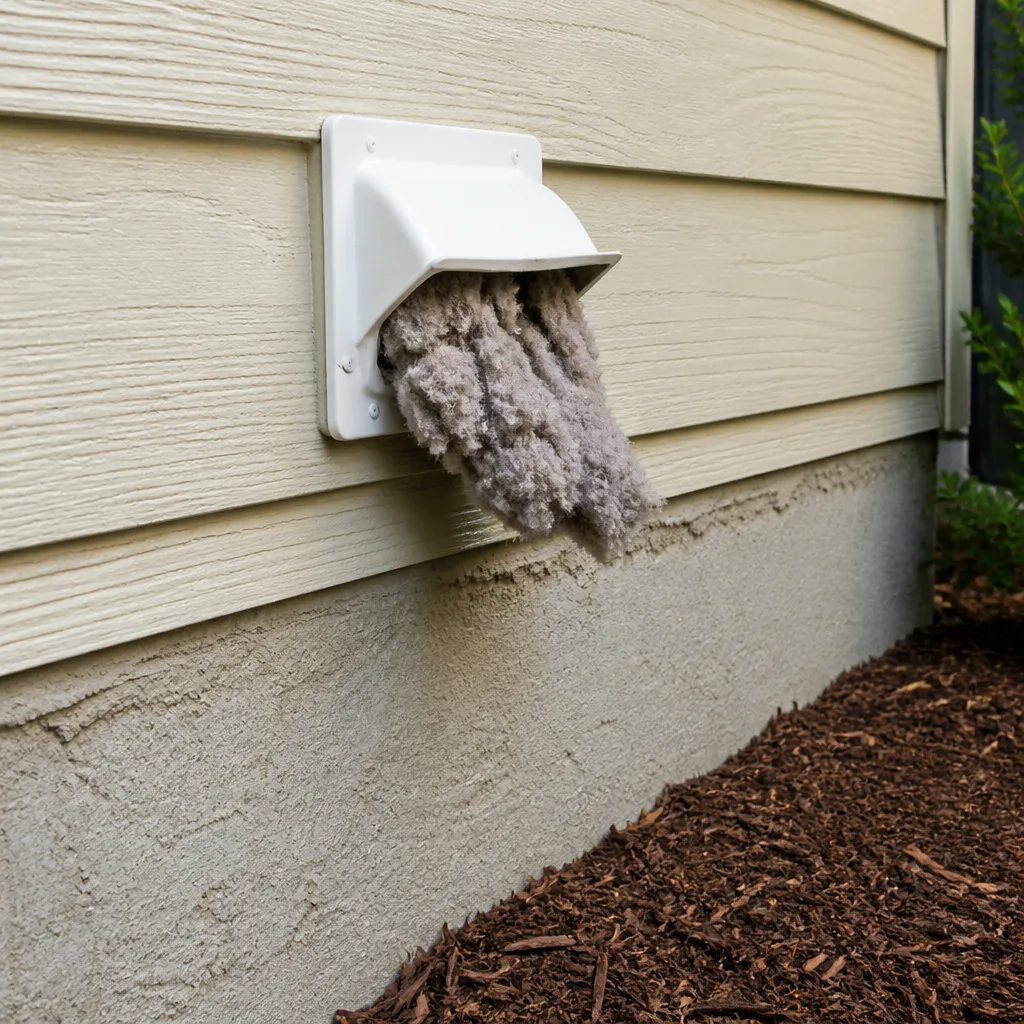 Dryer vent cleaning
 Camera inspection
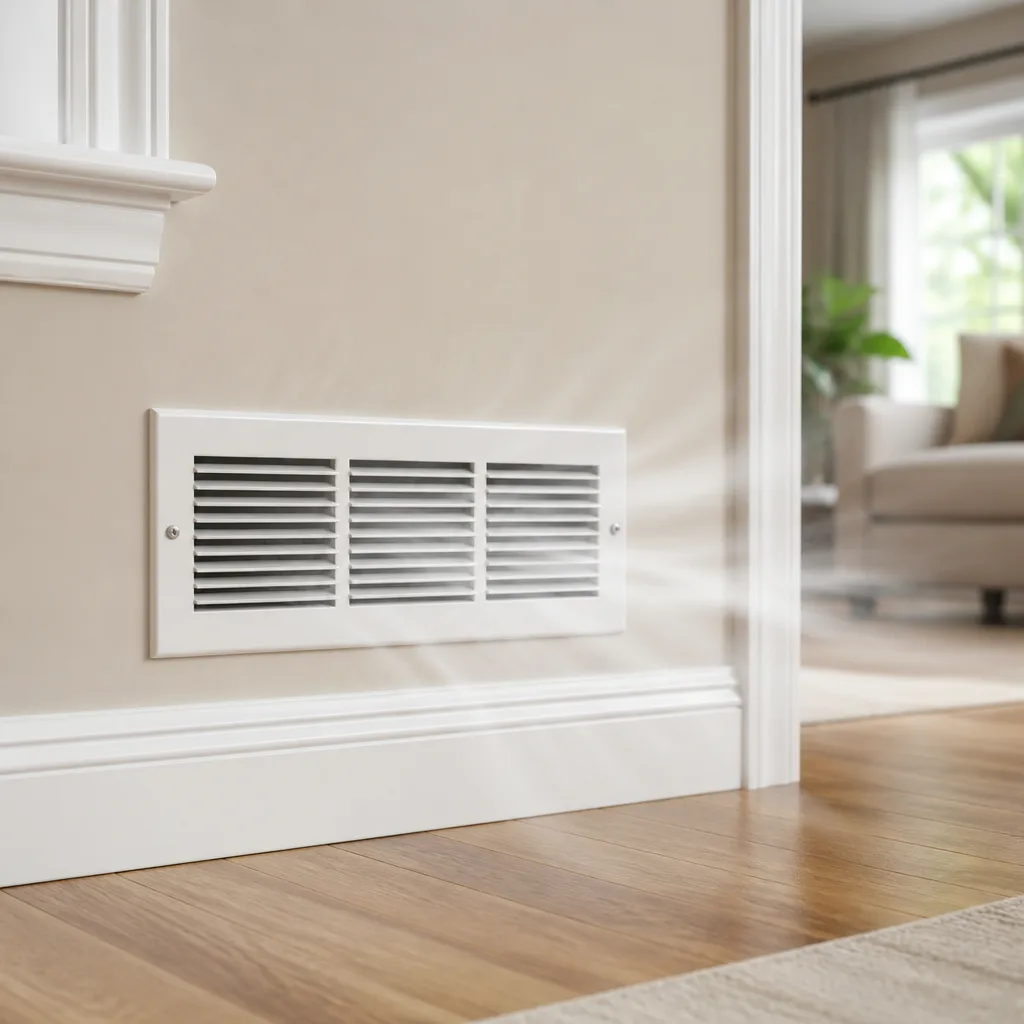 Sanitizing & deodorizing
Whole-system duct and dryer vent check with before-and-after photos - you see exactly what came out of your vents
That "$99 whole-house special" is a bait ad - the real number appears once they are in your hallway, or the "clean" is a shop-vac at the register. We photograph the inside of your ducts before and after instead.
Seasonal Air Duct Cleaning Care for Hollywood: Year-Round Homeowner’s Guide
Most seasonal duct care guides are written for a climate that gets four distinct seasons. Hollywood doesn’t. While much of the country shuts the AC off in October and waits for spring, homes here keep the cooling system running through what passes for winter. Many homeowners assume the calendar does the work for them: cool season comes, ducts rest, everything resets. It doesn’t. By the time a standard guide says “prepare for summer,” your system has already logged thousands of hours of runtime since the last cleaning. This guide reframes duct care around the two-phase cycle that actually defines Hollywood: a long cooling season and a brief, drier stretch. You’ll learn when to clean, how to inspect after a storm, what mold risk really looks like in this humidity, and how filter choices interact with a high-runtime system.
Quick Answer
In Hollywood, air duct cleaning should follow a two-phase schedule rather than a four-season one: a professional cleaning during the drier months from November through March, when lower humidity lets any disturbed moisture dry out, and a post-storm inspection after any hurricane or major wet-season event. Filter changes and visual checks belong on a faster cycle because your system runs far more hours per year than the national average.
Styles & brands we work with
- Whole-home duct cleaning
- Dryer vent cleaning
- Camera inspection
- Sanitizing & deodorizing
Table of Contents
- Why the Four-Season Model Fails in Hollywood
- Building Your Two-Phase Annual Duct Cycle
- Why November Through March Is the Best Cleaning Window
- Post-Hurricane Duct Inspection: What Storm Infiltration Looks Like
- Mold Risk Windows and Hollywood’s Humidity Curve
- Seasonal Filter Upgrades and High-Runtime Systems
- When Ducts Need Repair, Not Just Cleaning
- What a Proper Cleaning Actually Involves
Why the Four-Season Model Fails in Hollywood
The standard advice you’ll find online assumes your HVAC system gets long breaks. Furnace in winter, AC in summer, mild stretches in between where ducts sit undisturbed. Hollywood runs a different pattern. For most of the year the air handler is moving air, pulling it through the return, pushing it through the supply trunks, and cycling it back through the living space. The brief cool season doesn’t stop that. It just changes the load.
That difference matters because duct contamination is a function of runtime, not calendar months. Every hour the blower runs, air moves across duct surfaces, and whatever that air carries – dust, pollen, pet dander, cooking particles – has a chance to settle on the interior walls. A system that runs two or three times as many hours per year as one in a four-season climate accumulates material faster. Homeowners who follow generic seasonal schedules under-clean their systems without realizing it.
The same logic applies to moisture. Humidity is the single biggest variable in duct health, and it doesn’t follow the calendar here either. Hollywood sits in a subtropical pattern: a long warm, humid stretch and a shorter, noticeably drier stretch that usually lands between November and March. Contaminant loading and moisture risk peak at different times, which is why a single “clean once a year whenever” approach leaves gaps.
If you’ve read general advice about cleaning ducts “before heating season,” set it aside. That advice was written for homes where the furnace does the heavy lifting. Here, the cooling system is the workhorse, and the care schedule should reflect it.
Building Your Two-Phase Annual Duct Cycle
A working seasonal plan for a Hollywood home has two anchors, not four. Phase one runs during the drier months and centers on a full professional cleaning plus a system inspection. Phase two runs at the tail of the wet season and centers on inspection after storm events, with cleaning scheduled if the inspection turns up infiltration or standing contamination. Everything else – filter changes, visual checks – threads through both phases.
Here’s how we’d structure a year for a typical home in Hollywood. This is a general framework, not a rigid rule; a home near the Intracoastal with heavy pollen exposure may need more frequent filter changes than one with fewer exterior doors open during the dry months.
- Late October through November: Schedule the annual professional cleaning and full system inspection. This falls at the front of the dry season, so any moisture the cleaning process disturbs has time to dry before humidity climbs again.
- November through March: Replace filters on a normal cadence, keep an eye on return grilles for visible dust accumulation, and listen for changes in airflow at the registers.
- April through May: Pre-season check before peak cooling demand. Confirm filters are fresh, check that no return grilles are blocked by furniture or rugs, and schedule repair work if airflow readings feel weak.
- June through November (hurricane season): Watch for storm events. After any hurricane or major wind-driven rain, do a post-storm inspection before assuming the ducts are fine.
- Post-storm: If inspection finds intrusion, schedule cleaning and repair as soon as possible, before the system runs long cycles with compromised ductwork.
The order matters. Cleaning before the dry season gives you the cleanest possible system heading into peak cooling. Post-storm inspection before the next hot stretch protects the system from running for weeks on contaminated ductwork.
Why November Through March Is the Best Cleaning Window
Timing a professional cleaning around the dry season isn’t arbitrary. It comes down to what cleaning does to the duct environment. A proper contact-cleaning process agitates debris from duct walls and extracts it under negative pressure. Even with strong extraction, dislodged material and the moisture carried with it need somewhere to go. In high humidity, that drying process is slower, and slower drying is a risk factor, not a neutral one.
In Hollywood’s drier months, the air inside the home and inside the ducts holds less moisture. Surfaces dry faster. The system returns to a stable baseline more quickly, and the cleaner state persists longer because there’s less moisture in the air to feed new growth.
There’s a secondary benefit. Cleaning in the dry season means the freshly cleaned system heads into peak cooling demand in the best possible shape. If you wait until June to clean, the system spends the hottest, highest-runtime months of the year pulling air through whatever accumulated over the previous season.
A few practical notes on scheduling within that window:
- The dry season is not perfectly dry every year. Some seasons bring more rain than others, and that’s fine; what matters is relative humidity, not an absolute guarantee of dryness.
- If you’ve just bought a home in Hollywood, don’t wait for the calendar. A new purchase is a good reason to schedule an inspection regardless of the month.
- If inspection after a storm turns up contamination, clean immediately. Don’t wait for the next dry season to address compromised ductwork.
For a full picture of what the cleaning process involves, see our air duct cleaning page.
Post-Hurricane Duct Inspection: What Storm Infiltration Looks Like
Hollywood sits in hurricane country. Any storm strong enough to drive wind and rain into a structure can push material into the duct system, and ductwork connected to a compromised roof or a damaged return is an open pathway. The problem is that duct contamination from a storm doesn’t always announce itself. The system may still run. The air may still feel cool. What changes is what’s inside the ducts.
Here’s what storm infiltration typically looks like when we inspect after a major event:
- Visible debris in the return plenum or at the air handler: insulation fibers, dust, or fine grit that wasn’t there before the storm.
- Water staining or discoloration inside duct sections: dark marks, mineral deposits, or soft spots where moisture sat against the duct wall.
- Compressed or crushed flex duct runs: wind or structural movement can collapse sections, which restricts airflow and creates traps for debris.
- Separated joints or disconnected sections: connections that pulled apart during shifting or pressure changes, letting unconditioned attic or wall cavity air pull into the supply.
- Odor changes: a musty or earthy smell at the registers that wasn’t there before the storm often points to moisture that’s already had a few days to sit.
- New dust patterns at the supply registers: sudden dust accumulation on ceilings or walls near registers, especially after the first week of running the system post-storm.
If any of these show up, cleaning is required, and repair may be too. A system that pulls from a disconnected duct joint will keep drawing contaminants from whatever cavity it’s exposed to, no matter how well the ducts were cleaned before the storm. Repair and cleaning often go together after a storm event, which is why we offer Hollywood Duct Cleaning as a complete scope rather than a single service.
Mold Risk Windows and Hollywood’s Humidity Curve
Moisture is the root of most serious duct problems, and Hollywood’s humidity curve determines when that risk is highest. During peak wet season, the air moving through your system carries more water vapor, and surfaces inside the ducts stay closer to the dew point. Add a cooling coil that condenses moisture as part of normal operation, and you have a duct system that is, by design, working near the edge of what favors biological growth.
That doesn’t mean mold is inevitable. It means the window for early intervention is short. The signs worth monitoring:
- Musty odor at registers: the earliest indicator, usually noticeable before anything visible.
- Discoloration inside return grilles: dark spotting or a grayish film that wipes off and returns.
- Visible condensation on flex duct or metal duct surfaces: usually in the attic, where the temperature differential is steepest.
- Allergy symptoms that cluster indoors: not a diagnostic, but worth noting if the pattern is consistent with time spent in the home.
- Wet spots or staining around the air handler or plenum: often the first physical sign that moisture is pooling where it shouldn’t.
The dry season is the natural reset point. Cleaning during that window, plus a proper inspection of the air handler and coil, keeps the system in the best position to handle the wet season that follows. If you notice any of the signs above mid-wet-season, don’t wait for the calendar; have the system inspected.
Seasonal Filter Upgrades and High-Runtime Systems
Filter choice interacts with duct condition in ways most homeowners don’t consider. A higher-MERV filter catches more particles, but in a high-runtime system it also loads up faster and adds more static pressure to the blower. On clean, well-sealed ductwork, a higher-MERV filter is a straightforward upgrade. On ductwork with leaks or heavy contamination, a high-MERV filter can do more harm than good: the blower works harder, airflow drops at far registers, and the pressure imbalance pulls more air through leaks in the return.
Our general approach during the dry season:
- Confirm the ductwork is clean and sealed before climbing the filter MERV rating.
- Match filter cadence to runtime, not the calendar. A system running most of the year needs more frequent changes than a filter label suggests.
- If you use a whole-home air treatment or filtration product, have it inspected at the same time as the ducts. We work with and service Honeywell, Aprilaire, and Guardsman systems, and those products interact with duct conditions.
If your system has a compromised duct run, fix it before chasing a higher filtration rating. The filtration system can only work as well as the ductwork it’s attached to. That’s where our Hollywood service area repair work comes in: diagnosing and fixing compromised ductwork that cleaning alone cannot resolve.
When Ducts Need Repair, Not Just Cleaning
Cleaning fixes contamination. It does not fix ductwork that’s structurally compromised. The two are different problems, and confusing them is the single most common reason homeowners are disappointed with the results of a cleaning. A system with disconnected joints, crushed flex runs, or damaged plenum connections will re-contaminate quickly after cleaning, because the source of ingress hasn’t been closed.
The signs repair is the right call:
- Airflow that’s weak at far registers while strong at near ones, which often indicates a collapsed or pinched run.
- Dust returning to surfaces within a few weeks of a cleaning.
- Visible disconnected sections at the air handler or in the attic.
- Duct tape lifting, mastic failing, or joints that move when touched.
- Temperature differences room to room that cleaning alone doesn’t resolve.
We treat repair as a standalone service, not an upsell tacked onto a cleaning. When the inspection shows compromised ductwork, the honest answer is often that repair needs to happen first, or at least alongside cleaning, so the system performs correctly afterward. That’s a different scope of work than most duct cleaners offer, and it’s a big part of why a thorough inspection before cleaning matters.
What a Proper Cleaning Actually Involves
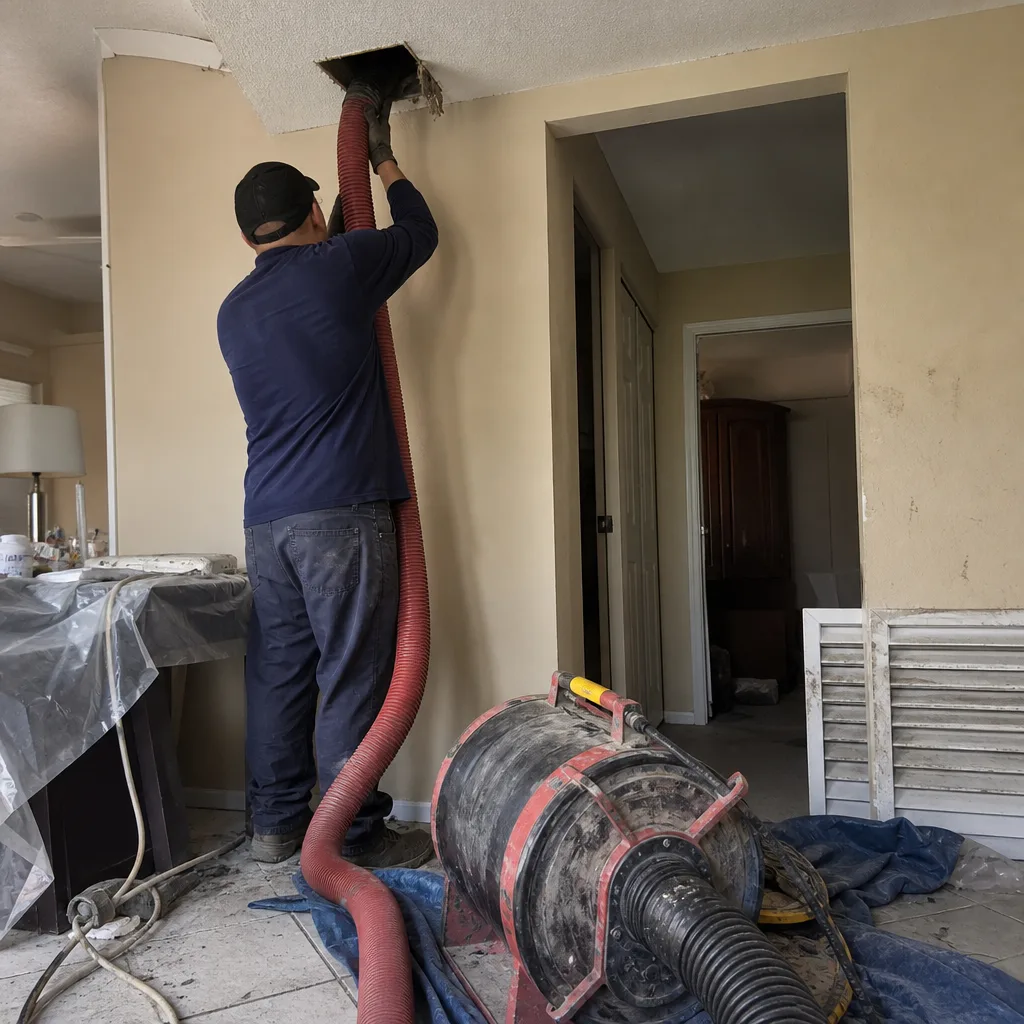
The difference between a real duct cleaning and a light vacuum pass comes down to equipment and method. A shop vac running through an open register does not clean duct walls; it moves loose debris near the opening and leaves the rest in place. Contact cleaning is a different process. It physically agitates and scrubs material from the interior duct wall surfaces, then extracts it under containment.
Here’s what a professional cleaning involves, in the order the work typically happens:
- Inspection first. Before any cleaning, the technician inspects the duct system, the air handler, and the accessible runs. Anything concerning gets flagged before work begins.
- Containment setup. Negative-pressure containment prevents dislodged debris from recirculating into the living space during cleaning. We use Nikro professional extraction equipment for this.
- Contact cleaning. The Rotobrush contact-cleaning system agitates the duct walls, scrubbing debris loose rather than passing a vacuum wand through the opening.
- Air-quality equipment. Abatement Technologies air-quality equipment brings a remediation-grade standard to containment and air safety during the job.
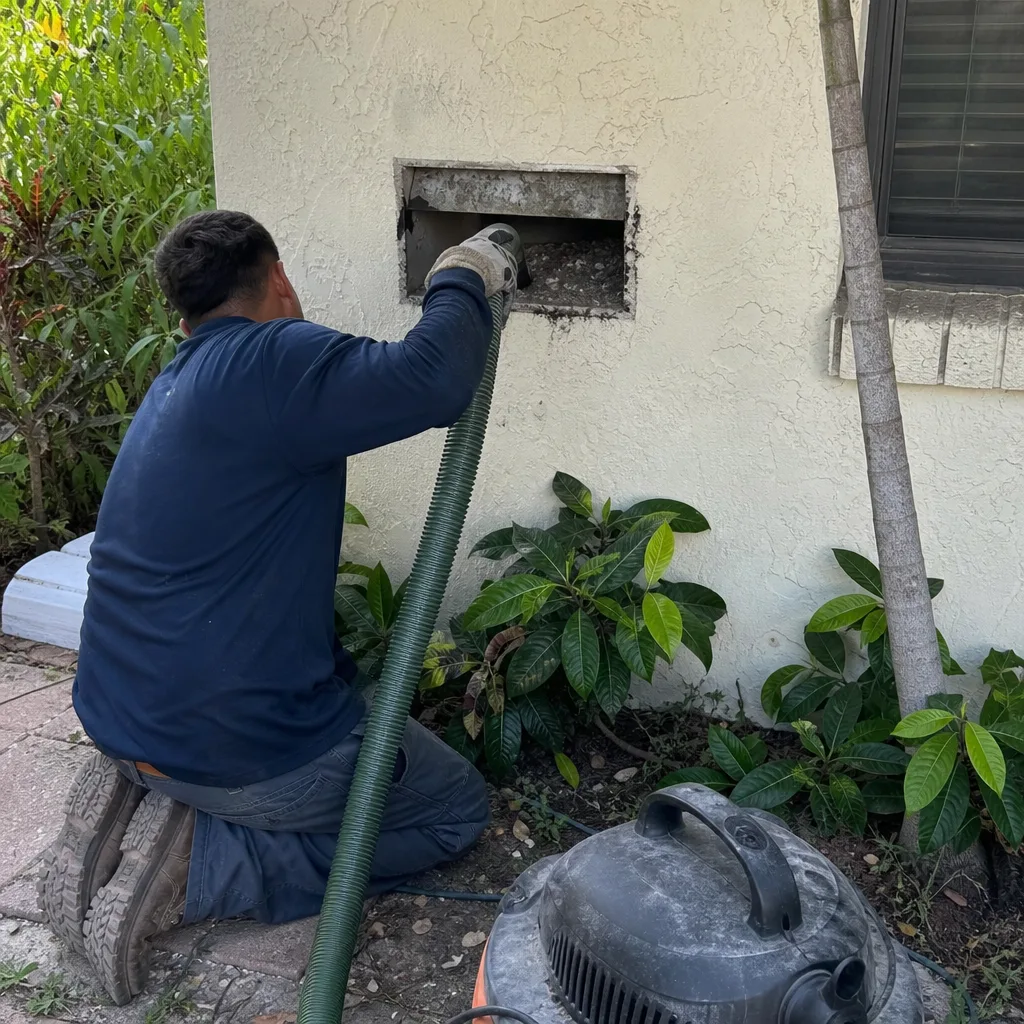
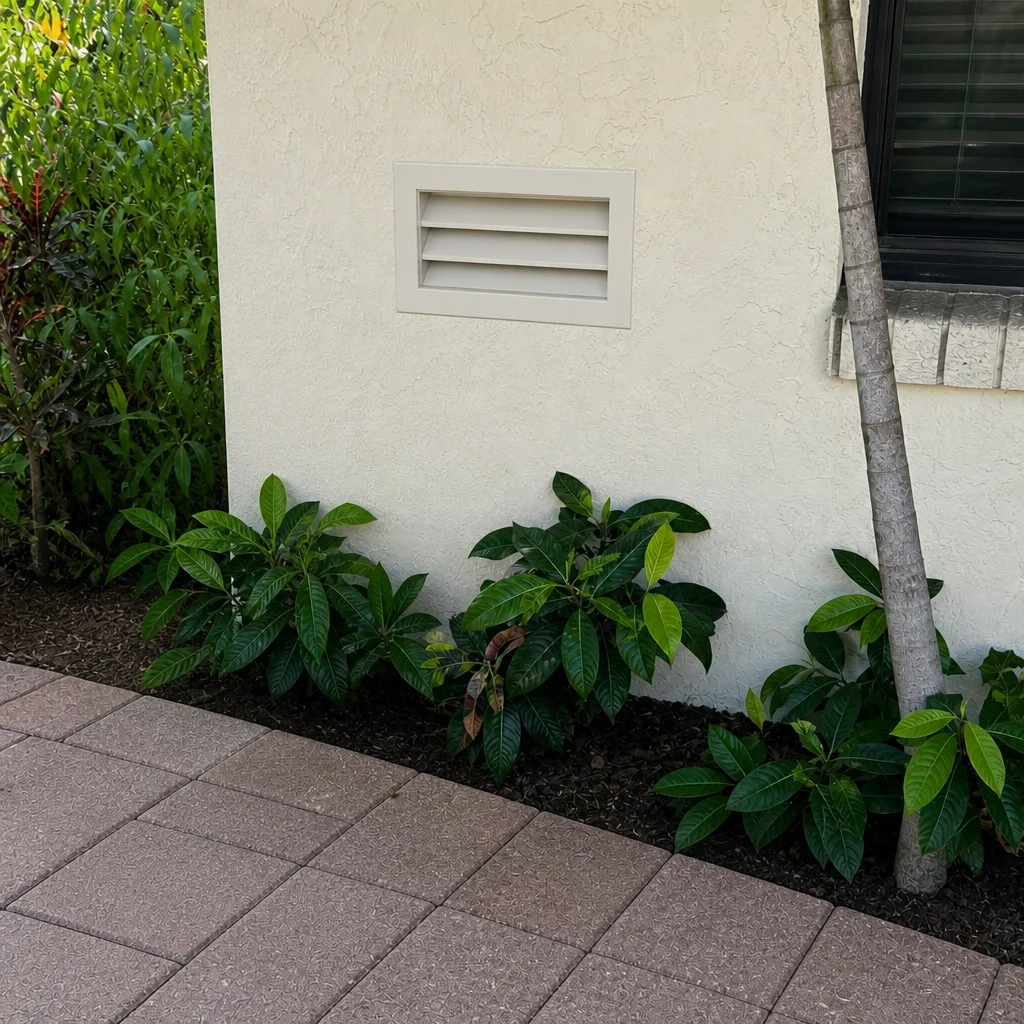
- Verification. Before-and-after photos of the ducts themselves, so you can see what the system looked like before and after.
That sequence is why we lead with the equipment: it’s the difference between cleaning the ducts and cleaning the openings. If you’re comparing quotes, ask what equipment the crew uses and whether they verify with photos. For the full breakdown of what a job involves, see our air duct cleaning page; for the fire-safety side of duct maintenance, our dryer vent cleaning page covers the lint-loading risk that builds up over the same runtime hours.
Common Mistakes to Avoid
- Following the four-season schedule. Cleaning “before heating season” doesn’t apply to a Hollywood home that runs cooling most of the year. Follow runtime and humidity, not a national calendar.
- Skipping inspection after a storm. A hurricane can push debris and moisture into ducts without stopping the system from running. The system feeling fine isn’t evidence the ducts are fine.
- Climbing the MERV rating on compromised ductwork. A higher-MERV filter on leaking ducts adds static pressure and drops airflow. Clean and seal the ducts first.
- Assuming cleaning fixes everything. Disconnected joints, crushed flex runs, and damaged plenum connections will re-contaminate the system after cleaning. Repair the framework before chasing cleanliness.
- Judging a cleaning by how the openings look. A vacuum wand through a register doesn’t reach the duct walls. Ask what equipment is used and whether the crew provides before-and-after photos of the ducts themselves.
- Waiting for a full season of symptoms before booking inspection. A musty smell or new dust at registers is an early signal. Waiting until symptoms build up leaves moisture sitting longer than it should.
- Treating the dryer vent as a minor item. Lint accumulation is a documented fire-safety risk. It belongs on the seasonal checklist alongside the supply ducts.
See the difference
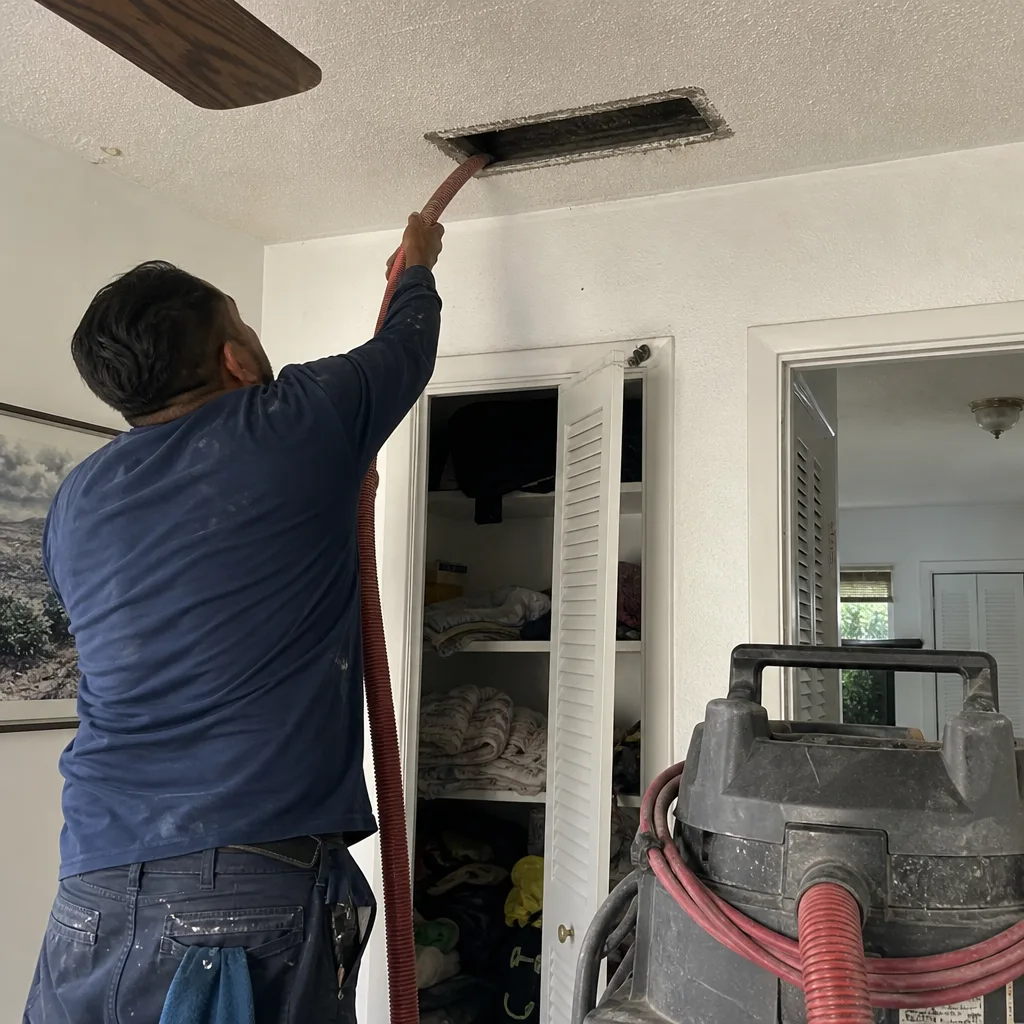 Before
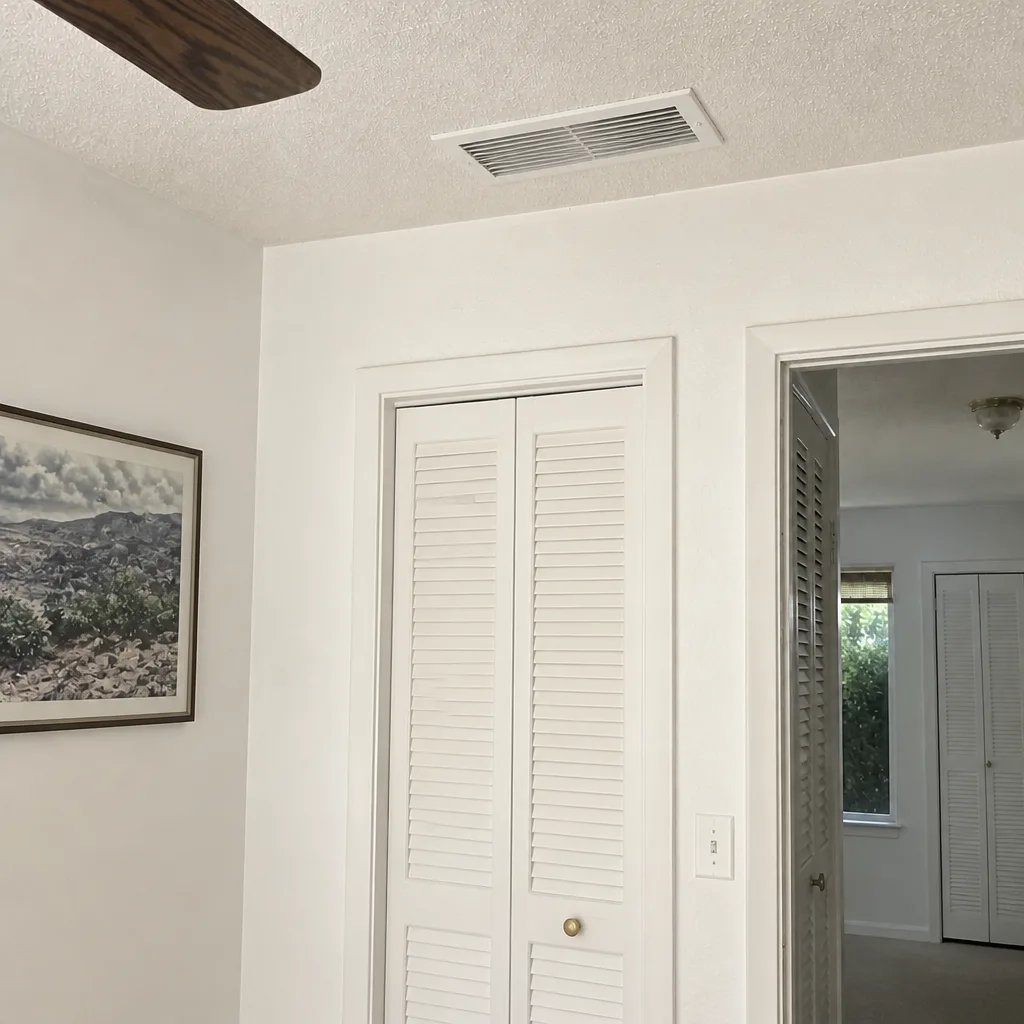 After
 Before
 After
 Before
 After
When to Call a Professional
Some duct work is doable as a homeowner check: replacing filters, clearing obstructions at registers, listening for airflow changes. Other situations call for a professional inspection. New home purchase, unusual odors, dust returning within weeks of a cleaning, visible moisture or staining anywhere in the system, storm events that may have impacted the ducts, and any suspicion that ductwork is disconnected or crushed are all good reasons to have the system looked at. If you’re in Hollywood, our team offers free estimates; call (866) 361-9843 to schedule. We answer 24/7. Fast dispatch from 7am to 7pm, Sunday through Friday.
Frequently Asked Questions
For most Hollywood homes, once a year, timed to the drier months from November through March, plus a post-storm inspection whenever a hurricane or major wet-season event passes through. Because the cooling system runs more hours per year here than in a four-season climate, that annual cleaning matters more, not less. Homes with pets, allergy concerns, or recent duct repairs may need more frequent inspection. Call (866) 361-9843 for an exact quote based on your system.
Before the wet season, generally. Cleaning during the drier window from November through March gives the ducts maximum time to dry out internally, and it resets the system before peak humidity and peak cooling demand. Cleaning after the wet season is fine if the system is otherwise clean, but waiting until the wet season is underway leaves moisture disturbance slower to resolve.
Schedule an inspection rather than running the system continuously. A musty odor at the registers usually points to moisture that’s already been sitting for several days, and every additional hour of runtime pushes that air through the living space. Inspection will tell you whether the issue is cleaning, repair, or both. Call (866) 361-9843; we answer 24/7. Fast dispatch from 7am to 7pm, Sunday through Friday.
Only after the ductwork is confirmed clean and well-sealed. On compromised ductwork, a higher-MERV filter increases static pressure and reduces airflow at far registers, which often makes the problem worse rather than better. Confirm duct condition first, then move up in filtration. We work with and service Honeywell, Aprilaire, and Guardsman systems, so filter and air-treatment upgrades can be planned around your existing setup.
Ask for before-and-after photos of the ducts themselves, taken inside the duct runs, not at the registers. Contact cleaning with the Rotobrush system and negative-pressure containment from Nikro equipment is what separates a real cleaning from a vacuum pass, and the photos are the proof. We provide before-and-after photos of your own ducts at the end of every job.
It raises the moisture baseline, which makes early detection more important, not less. Mold risk is tied to moisture sitting on duct surfaces over time, and in a subtropical climate that moisture window is longer. Cleaning during the dry season, inspecting the air handler and coil at the same time, and watching for early signs like musty odors and discoloration inside return grilles all reduce the risk. If you’ve spotted any of the early signs, have the system inspected rather than waiting.
The Bottom Line
Duct care in Hollywood follows a different rhythm than the rest of the country. The four-season model doesn’t fit a home that runs cooling most of the year, and following it leaves gaps in coverage. Build your plan around two phases instead: a full professional cleaning during the drier months from November through March, and a post-storm inspection after every hurricane or major wet-season event. Watch the humidity curve for early mold signs, treat filter upgrades carefully on high-runtime systems, and remember that repair and cleaning solve different problems.
Whether you’re scheduling your dry-season cleaning, dealing with a recent storm, or facing a duct repair decision, Hollywood Duct Cleaning offers free estimates. Call (866) 361-9843. We answer 24/7. Fast dispatch from 7am to 7pm, Sunday through Friday. One flat price per system, agreed before work starts, with before-and-after photos of your ducts at the end.
Written by the team at Hollywood Duct Cleaning.