
Last updated November 15, 2026
 Whole-home duct cleaning
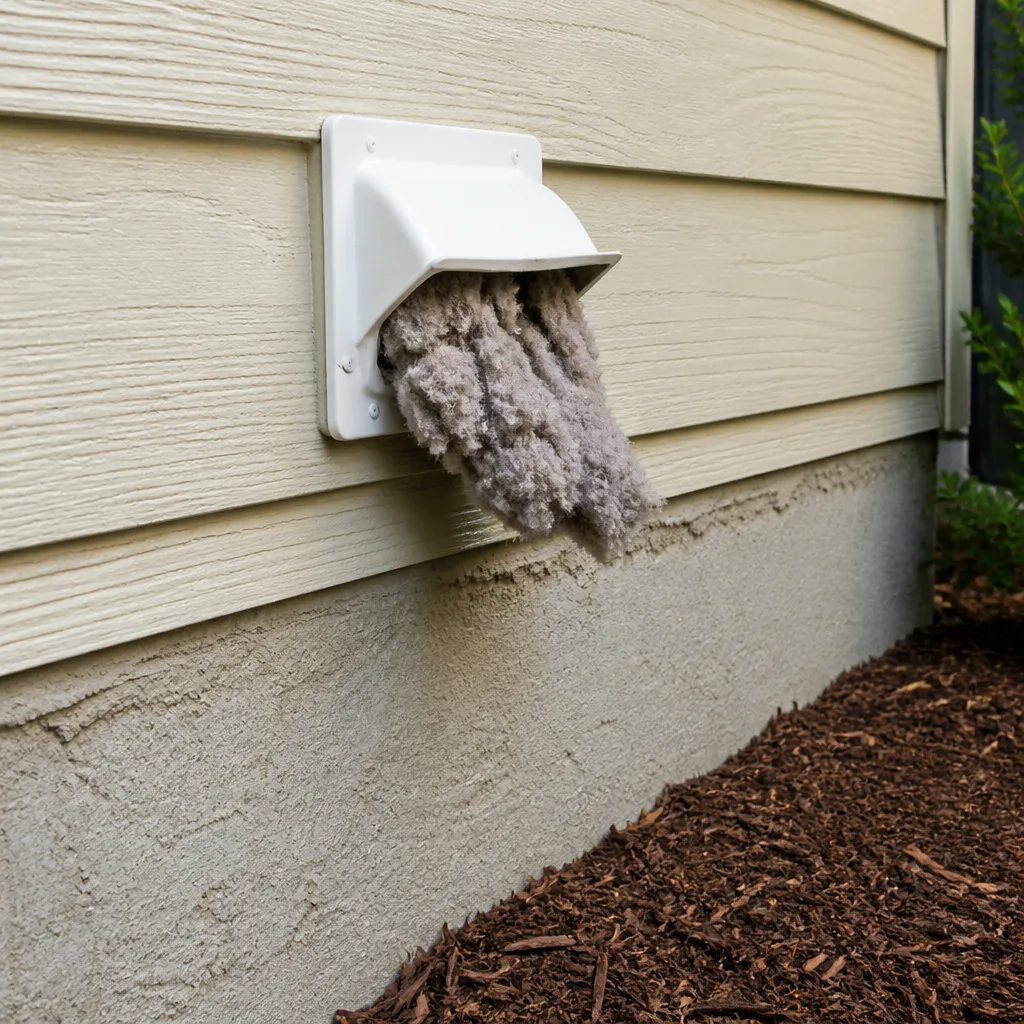 Dryer vent cleaning
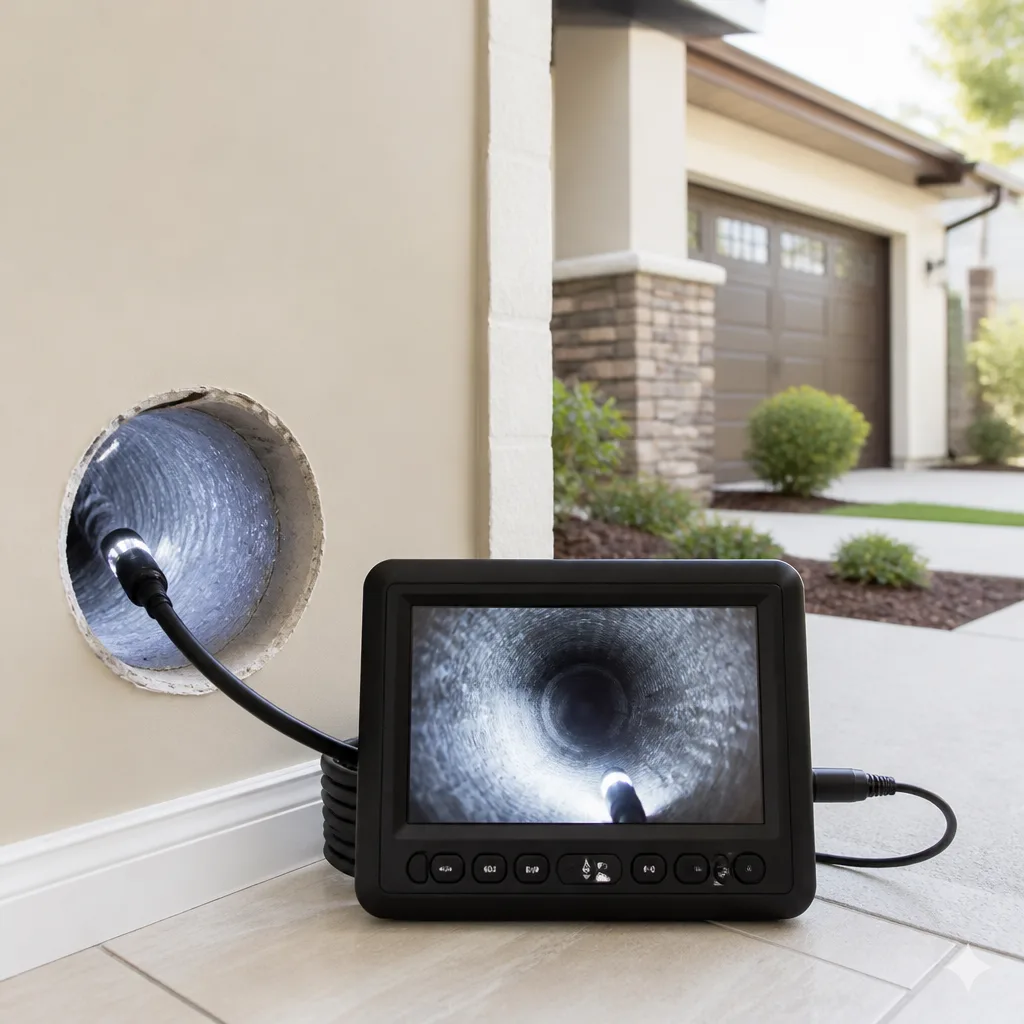 Camera inspection
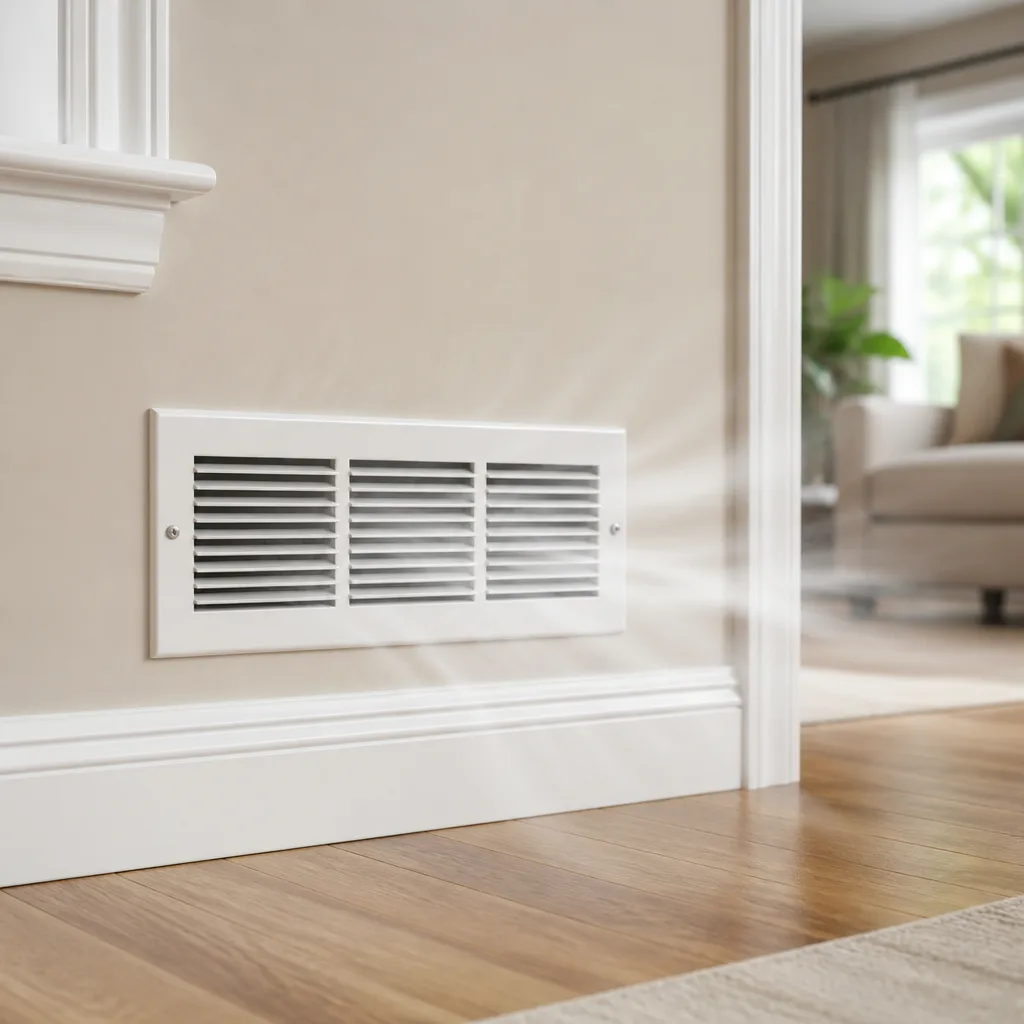 Sanitizing & deodorizing
Whole-system duct and dryer vent check with before-and-after photos - you see exactly what came out of your vents
That "$99 whole-house special" is a bait ad - the real number appears once they are in your hallway, or the "clean" is a shop-vac at the register. We photograph the inside of your ducts before and after instead.
Air Duct Cleaning Troubleshooting in Hollywood: Common Problems and How to Fix Them
Most homeowners in Hollywood treat a musty smell or a weak register as a cleaning failure, and they assume the fix is another pass with a vacuum. That instinct is usually wrong. Symptoms in an air system rarely come from surface dust alone. Weak airflow, uneven cooling, and lingering odors each trace back to a specific mechanical condition inside the ductwork, and knowing which condition you’re looking at changes everything about how it gets resolved. This guide shows you how to read those symptoms the way a technician does, so you understand what you’re dealing with before anyone knocks on the door in Hollywood.
Quick Answer
Air duct problems in Hollywood usually fall into one of four buckets: dirt, air leakage, a structural failure like collapsed flex duct, or moisture. Fixing the wrong one wastes money. Persistent smells after a cleaning almost always point to moisture or biofilm left in fiberglass-lined duct, not missed debris, and the standard remedy for that is remediation-grade negative-pressure equipment rather than a second vacuum pass. Contact cleaning with a Rotobrush system, combined with proper containment, addresses dirt; duct repair addresses structure; and a careful moisture assessment addresses the rest.
Styles & brands we work with
- Whole-home duct cleaning
- Dryer vent cleaning
- Camera inspection
- Sanitizing & deodorizing
Table of Contents
- Why Air Duct Cleaning Problems Persist After a Service
- Matching Symptoms to Causes: A Diagnostic Map
- Humidity, Moisture, and Why Fiberglass-Lined Ducts Fail Differently Here
- When a “Cleaning Problem” Is Really a Sealing Problem
- What You Can Safely Check Yourself vs. What Needs a Camera
- Air Duct Repair vs. Air Duct Cleaning: Knowing Which You Need
- Why Equipment Choice Determines the Outcome
Why Air Duct Cleaning Problems Persist After a Service
A cleaning that doesn’t resolve the complaint usually failed for one of three reasons: the debris was never physically dislodged from the duct wall, it was dislodged but reintroduced into the living space, or what the homeowner described as “dirty ducts” was actually a structural or moisture problem that no amount of cleaning would fix. Those are very different failures, and they get confused constantly.
The first two come down to method. A vacuum wand passed through a register opening draws air and loose surface particles, but it doesn’t scrub the duct wall. Dust, dander, and the thin film that builds on flex duct lining adhere to the surface; they need contact agitation to break free. The Rotobrush contact-cleaning system we use on every air duct job is built around exactly that principle: a rotating brush physically agitates the duct wall while extraction pulls the loosened material away. That’s the industry benchmark for surface-level debris removal, and it’s why a job done with contact cleaning looks and smells different from one done with suction alone.
The second failure is containment. Once debris is airborne inside the system, it has to go somewhere. Without negative pressure maintained throughout the job, much of it settles back into the duct on the return side or drifts into the rooms. Nikro industrial extraction equipment is designed to hold that negative-pressure containment for the duration of the work, so dislodged material moves toward the vacuum rather than into your air supply. Abatement Technologies air-quality equipment rounds out the setup for containment and air safety during service. When someone tells you their ducts were cleaned and the smell lingered for weeks afterward, the most common explanation is that containment was never properly established in the first place.
Matching Symptoms to Causes: A Diagnostic Map
Homeowners describe the same handful of complaints, and each one narrows the cause significantly. Here’s how to read them.
Weak airflow from one or two registers
If most of the house cools and heats normally but one or two rooms are noticeably weak, the cause is almost always local to that branch. A collapsed section of flex duct, a disconnected joint, or a crushed run behind drywall is far more likely than a house-wide dirt problem. Ask whether the weak register has always been weak or became weak recently. A sudden change points to a physical failure; a gradual one points to buildup or a damper issue.
Weak airflow everywhere
System-wide weakness tends to come from a restricted filter, a blower problem, or heavy buildup on the return side. Before assuming ducts, check the filter and the filter slot (see the self-check section below). A filter that’s been left in too long chokes the whole system and mimics a duct problem convincingly.
Musty or “dirty sock” smell
Odor is a different signal from airflow, and it usually points to moisture. In Hollywood, where the air holds a lot of humidity through much of the year, fiberglass-lined duct interiors can hold moisture after a cleaning if the equipment used didn’t dry or contain properly. Odor that appears or worsens after a cleaning is a strong clue that residual moisture or biofilm is the real issue.
Uneven cooling between rooms
Consistent temperature differences between rooms, especially in two-story homes and additions, frequently trace to duct leakage rather than dirt. Supply air escaping into an attic or wall cavity never reaches the room it was meant for.
Visible dust around registers
Streaking or dust rings around the register grille often mean the boot or the connection behind the grille is loose or unsealed. Sealing addresses it; cleaning does not.
- Localized weak airflow: collapsed, crushed, or disconnected branch duct
- System-wide weak airflow: filter restriction, blower issue, or heavy return-side buildup
- Musty odor: moisture or biofilm in lined duct
- Uneven room temperatures: duct leakage at joints or boots
- Dust at the grille: unsealed boot or connection
Humidity, Moisture, and Why Fiberglass-Lined Ducts Fail Differently Here
Hollywood’s climate puts a specific kind of stress on duct systems that dry-climate guides never address. Warm, humid air meeting cool duct surfaces creates condensation, and fiberglass-lined duct is porous by design. Once moisture gets into the lining, it doesn’t simply evaporate away. It sits, and it supports the growth of biofilm and odor-causing organisms on the interior surface.
This matters for two reasons. First, it means a visual inspection through a register can miss the problem entirely. The lining looks fine at the opening and feels slightly damp at most, but deeper in the run the surface is holding moisture against the insulation. Second, it means cleaning without addressing moisture can make the complaint worse, not better. Pushing air through a damp lined duct can spread the very smell the homeowner is trying to eliminate.
What we look for in this situation is the pattern, not a single clue: the location of the odor relative to the system layout, whether it’s stronger in rooms that sit above the garage or in the more humid part of the house, whether the complaint appeared after a recent cleaning, and whether the ducting is lined flex or rigid. Remediation-grade equipment helps here as well. Abatement Technologies air-quality equipment, which is the same class of tooling used in professional indoor air quality and abatement work, supports proper containment and air handling so a moisture problem gets treated like one instead of being pushed around a sealed box.
If the ductwork is damp, the fix isn’t necessarily re-cleaning. It may be drying, sealing, or replacing the affected section. Air duct repair as a standalone service exists for exactly this scenario.
When a “Cleaning Problem” Is Really a Sealing Problem
Duct leakage is the most misdiagnosed condition in this trade. Air escaping at a joint, a boot, or a disconnected run doesn’t produce obvious dust in the living space. It produces temperature complaints. A room that runs three degrees warmer than the rest of the house, or a system that seems to run longer than it should, is a temperature story, and temperature complaints usually come from leakage, not dirt.
Here’s how to tell them apart in practical terms:
- Watch the register with the system running. A clear, strong stream of air with no wobble suggests the branch is connected and open. A faint or erratic stream suggests a leak upstream or a crushed section.
- Listen at the equipment closet or attic access. A hiss or whistle from the ductwork near the air handler is a strong indicator of leakage under pressure.
- Notice the pattern across rooms. Leaks that feed a bonus room or an addition are often traceable to an unsealed boot or a flex run that was never properly strapped.
- Look for condensation or staining. A cold supply leaking into warm humid space in a Hollywood attic can leave visible moisture marks on the duct jacket, which is a strong clue.
Sealing is a repair job, not a cleaning job. If a cleaning was sold to solve a leakage complaint and the complaint remains, that’s the reason. Hollywood Duct Cleaning offers air duct repair as a standalone service precisely so a leakage or structural problem can be diagnosed and fixed on its own terms, whether or not a cleaning is also warranted.
What You Can Safely Check Yourself vs. What Needs a Camera
There’s a lot a homeowner can inspect without tools or risk, and a handful of things that genuinely require a trained eye and a camera run inside the plenum. Knowing the difference keeps you safe and keeps the diagnosis clean.
Safe to check yourself
- Register grilles: remove one or two and look at the boot opening. Dust streaking or a visible gap around the boot edge is information a technician can use.
- The filter slot: pull the filter and look at the slot. Debris bypassing a poorly fitted filter is common and visible.
- Visible flex duct runs: in an accessible attic, a crushed, sagging, or kinked flex run within reach is worth photographing. Don’t tug on it or attempt to reposition it.
- Airflow at each register: a piece of tissue held up to each grille tells you which branches are weak, and that pattern is diagnostic.
- Odor check: note which rooms smell strongest and when. That pattern matters.
Requires a professional with a camera
- Inside the main trunk and plenum: the plenum and trunk lines are the parts of the system a homeowner can’t safely see, and they’re where the most consequential findings live: separation, liner damage, and moisture.
- Duct interior condition after a cleaning claim: verifying that contact cleaning actually reached the duct wall means looking inside the run, which requires a camera.
- Anything involving the air handler or a gas appliance: and this is worth saying plainly. The air handler, electrical connections, and any gas-fired equipment are not DIY territory. Trained professionals handle that side of the system because the risks of shock, gas leaks, and fire are real, and the work is not worth gambling on.
- Hidden runs behind drywall or above ceiling: a camera run through an access point is the only way to see these without opening walls.
If you spot something concerning, photograph it and describe the pattern on the call. That information shapes the diagnostic approach, and it’s often the fastest way to get to the right fix.
Air Duct Repair vs. Air Duct Cleaning: Knowing Which You Need
Homeowners often ask for cleaning when the underlying problem is a repair, and sometimes the reverse. The distinction is straightforward once you know what each one actually addresses.
Air duct cleaning removes accumulated debris from the duct wall surface. It’s the right answer when the complaint is dust, allergen load, or odor traceable to buildup, and the ductwork itself is structurally sound. Contact cleaning with Rotobrush equipment plus negative-pressure containment handles that job completely when it’s the right job.
Air duct repair addresses the system’s physical integrity. That includes collapsed or crushed flex runs, disconnected joints, sealed-then-failed connections, liner damage, and the boot seals behind registers. Air duct repair is the right answer when the complaint is airflow, temperature, or system performance, and cleaning can’t fix it because cleaning doesn’t reconnect anything.
Dryer vent cleaning sits in a different category entirely, and it belongs here because it’s a safety issue, not a convenience one. Lint accumulation in a dryer vent is a documented fire risk, and the vent is a piece of ductwork that gets treated like an afterthought in most homes. A Hollywood home’s dryer venting through an interior wall or a long run has more opportunity for lint to settle and restrict than a short straight run does. Treating it as a maintenance item worth doing on its own schedule is the right approach; treating it as a cleaning add-on is how it gets skipped.
In practice, many jobs involve more than one of these. That’s why we scope the work before touching anything. Hollywood Duct Cleaning offers dryer vent cleaning alongside duct cleaning and duct repair, so a homeowner gets a whole-system read rather than a single-service pitch.
Why Equipment Choice Determines the Outcome
The single biggest factor separating a cleaning that resolves the complaint from one that doesn’t is the equipment on site, and most homeowners never think to ask about it. Here’s the short version of what actually matters and why.
- Contact agitation. A vacuum alone doesn’t dislodge surface film from duct walls. The Rotobrush system rotates a brush against the duct wall while extracting, which is what makes it a contact-cleaning method rather than a suction method.
- Negative-pressure containment. Nikro professional extraction holds the system under negative pressure so dislodged material travels toward the vacuum rather than back into the rooms. Without containment, a cleaning can redistribute debris.
- Air-quality handling. Abatement Technologies equipment brings remediation-grade containment and air safety practice to the job, which is the same class of tooling used in indoor air quality work, and it matters more in a humid climate where moisture complicates everything.
- System compatibility. Duct cleaning should work with the filters and air treatment products already installed. We work with Honeywell, Aprilaire, and Guardsman systems covering filtration, air treatment, and duct protection, so a cleaning doesn’t ignore the equipment that determines how fast the system gets dirty again.
The practical takeaway is simple: ask what equipment will be used before the job starts, and ask whether contact cleaning and negative-pressure containment are part of the plan. If the answer is “a shop vac and a wand,” that tells you what kind of result to expect. Our technicians have up to 14 years of experience, and the job is a straight answer to the equipment question, not a sales pitch.
Common Mistakes to Avoid
- Assuming a smell after cleaning means the job was skipped. Odor after cleaning most often means residual moisture or biofilm in lined duct, not missed debris, and the answer is a moisture assessment, not a second vacuum pass.
- Booking a cleaning for a temperature complaint. Uneven cooling usually points to duct leakage, and cleaning won’t seal anything. Ask for a leakage check before you book a cleaning for a hot room.
- Choosing on price alone. In a humid climate like Hollywood’s, the equipment and containment method decide whether the job works. A low quote for a vacuum-only service tends to mean the duct wall was never scrubbed and the debris was never fully contained.
- Forgetting the dryer vent. Hollywood homes with interior dryer runs and elbows accumulate lint faster than short straight runs. This is a fire-safety item worth scheduling on its own, not an add-on you skip.
- Ignoring the filter slot. A filter that doesn’t seal at the edges lets debris bypass filtration entirely and load the duct. Checking the slot takes a minute and prevents a lot of repeated cleaning.
- Skipping the inspection inside the plenum. Visual inspection through a register can’t reveal liner damage or moisture deeper in the run. A camera check inside the plenum is how you actually confirm what’s happening.
- Taking on duct repair yourself. Crushed runs and disconnected joints behind drywall look simple and rarely are. A repair done badly makes the airflow complaint worse, and the access work carries real risks.
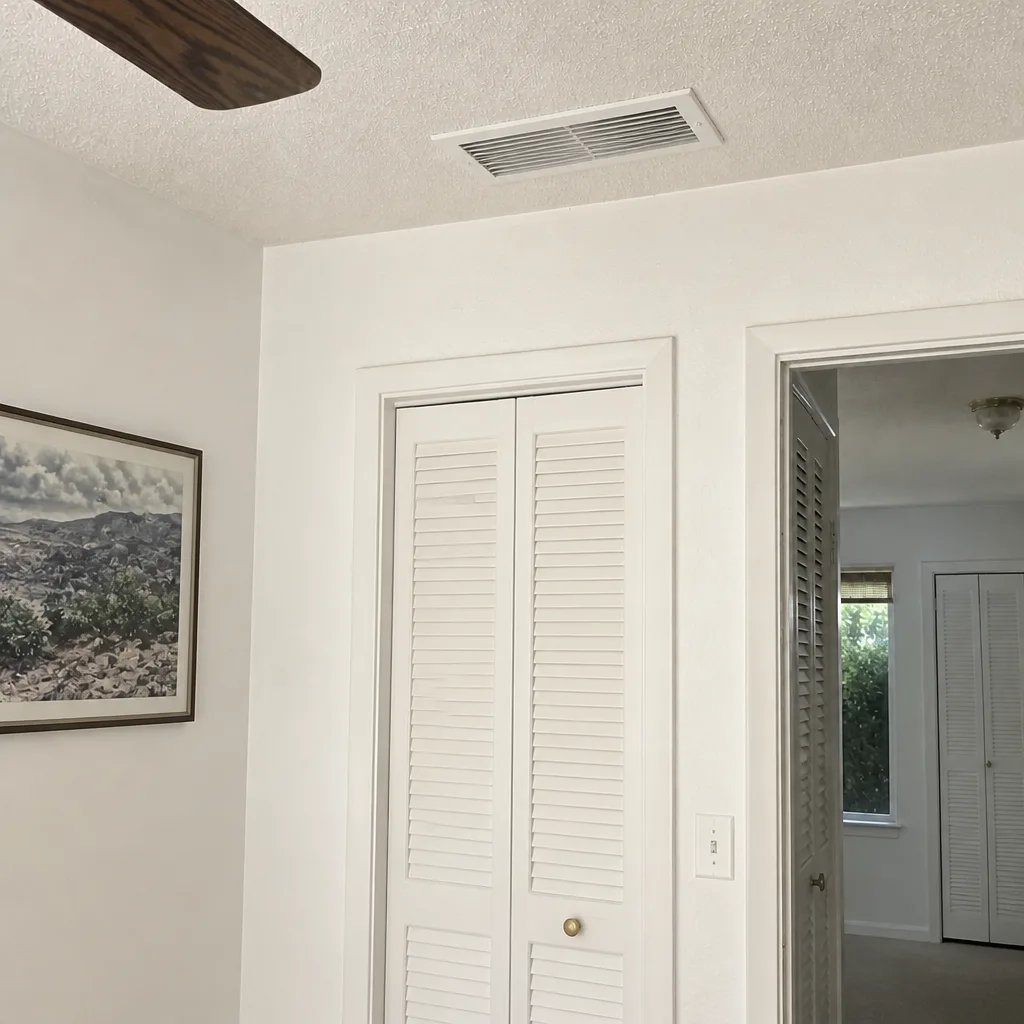
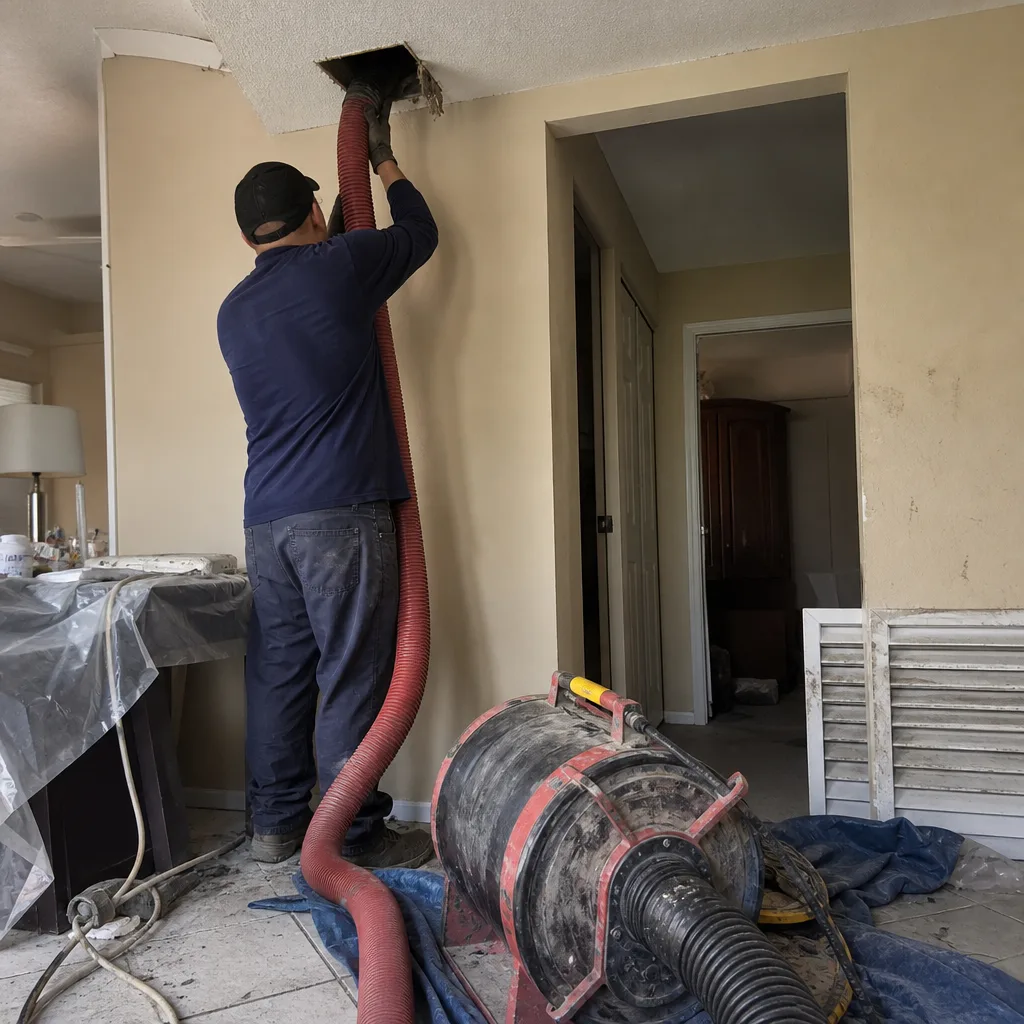
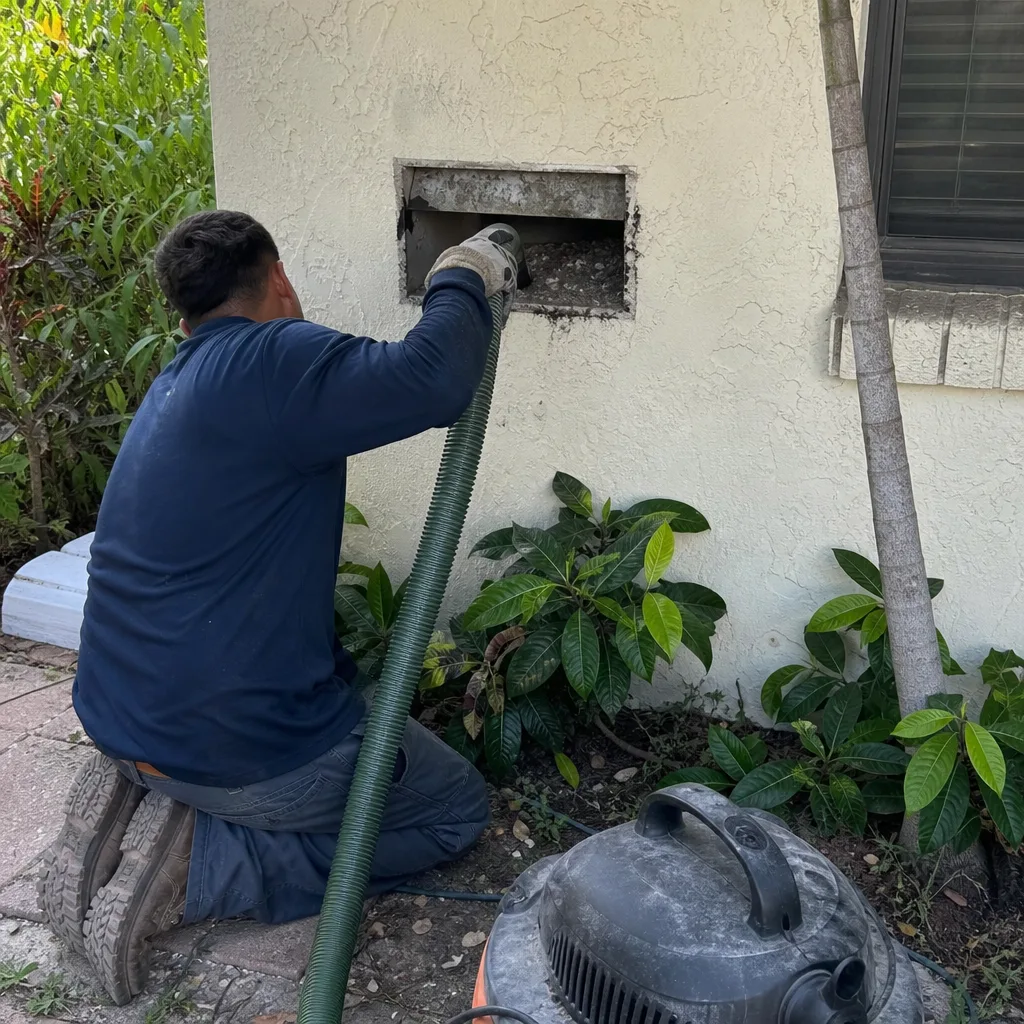
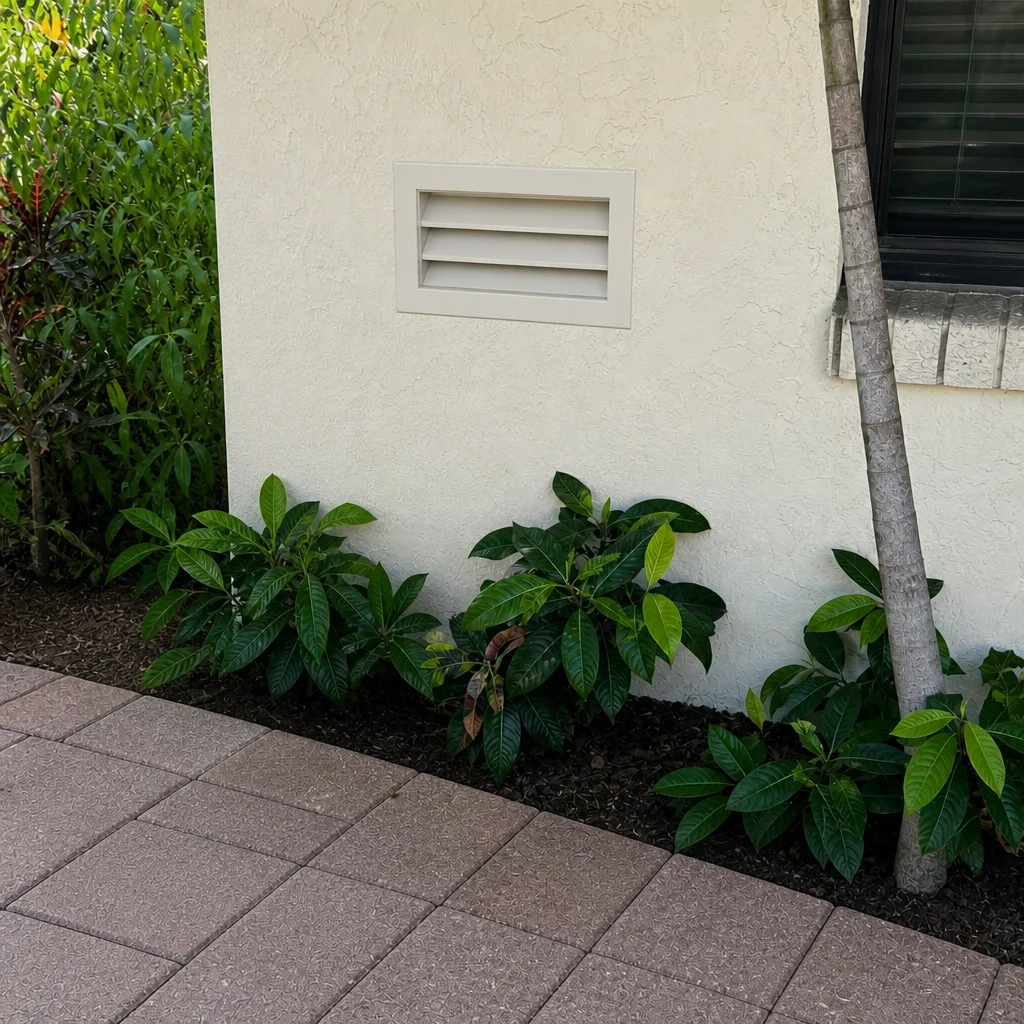
See the difference
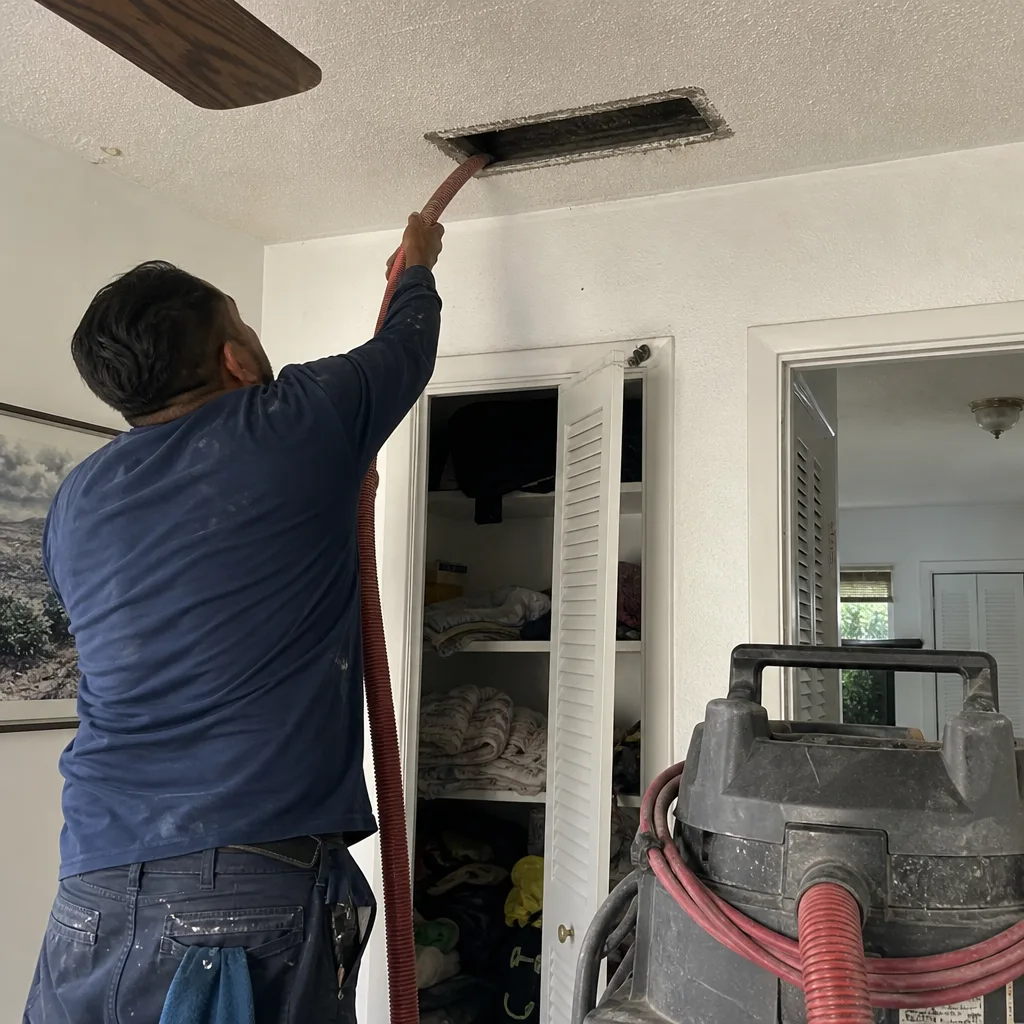 Before
 After
 Before
 After
 Before
 After
When to Call a Professional
Call a professional when a symptom has a pattern you can’t explain yourself, when the problem is airflow or temperature rather than dirt, when you’re dealing with moisture or odor in lined duct, when a camera inspection is needed inside the plenum or trunk, or when the dryer vent hasn’t been checked and the run has elbows or interior routing. Also call if you’ve had a cleaning and the complaint persists, because that’s a diagnostic question, not a repeat-job question. And call before touching anything involving the air handler, electrical connections, or gas-fired equipment. Hollywood Duct Cleaning offers free estimates in Hollywood. Call (866) 361-9843. We answer 24/7. Fast dispatch from 7am to 7pm, Sunday through Friday.
Frequently Asked Questions
Odor that persists after cleaning almost always means moisture or biofilm is living in fiberglass-lined duct, not that debris was missed. Humidity in Hollywood works its way into porous lining and supports growth that a vacuum pass can’t remove. The fix is a moisture assessment with remediation-grade containment equipment, and sometimes drying or repair of the affected section. Call (866) 361-9843 for an exact estimate. The estimate is free.
Air duct cleaning in Hollywood is priced per system, not per vent, and the written estimate sets the final figure before any work starts. Per-vent pricing and teaser coupon figures are the source of most of the bait-and-switch complaints in this trade, so we quote the whole job. Call (866) 361-9843 and we’ll scope the system and put the number in writing.
Watch the pattern. Dirt tends to produce dust at the registers and a gradual decline in air quality, while a structural problem produces localized weak airflow or uneven cooling, and a moisture problem produces odor. If the complaint is temperature or airflow, suspect a duct failure before dirt. A camera inspection inside the plenum confirms it. Call (866) 361-9843 to book a diagnosis.
Yes, but the method matters more here than in dry climates because moisture complicates everything. Contact cleaning with a Rotobrush system and proper negative-pressure containment removes the debris without pushing moisture around, and the moisture itself gets assessed separately. Skimping on equipment in this climate tends to mean doing the job twice.
Contact cleaning means physically agitating the duct wall surface with a rotating brush while extracting the loosened material, rather than drawing air past a stationary vacuum head. Dust and dander bond to flex duct lining, so agitation is what actually breaks them free. That’s why we run the Rotobrush system on every air duct job.
Yes, and it’s one of the most common causes of a consistently warm room. Supply air escaping at a joint or an unsealed boot never reaches the room, so the system runs longer and the room stays warmer than the rest of the house. Air duct repair addresses it; cleaning doesn’t. Call (866) 361-9843 to have the leakage checked.
There’s no single schedule that fits every home. Homes in Hollywood with pets, recent renovation, allergy concerns, or a history of moisture in the ductwork tend to need it more often than an average household, and a system with a properly sealed filter slot and good filtration stays cleaner longer. Ask for an assessment rather than a calendar.
Yes. We work with Honeywell, Aprilaire, and Guardsman systems, covering filtration, whole-home air treatment, and duct protection. Cleaning works best when it’s coordinated with the equipment that controls how quickly the system loads up again, so it’s worth telling us what’s installed when you book. Call (866) 361-9843 to discuss it.
The Bottom Line
The core lesson of troubleshooting air duct problems in Hollywood is that symptoms carry information. Weak airflow, uneven cooling, and lingering odor each point to a specific cause, and mistaking one for another is how homeowners end up paying for a cleaning that never had a chance of solving the complaint. Read the pattern first. If the complaint is dirt, contact cleaning with proper containment resolves it. If it’s airflow or temperature, suspect leakage or a structural failure and look at air duct repair. If it’s odor, look at moisture. Ask what equipment will be on site before you book anything, and don’t skip the dryer vent, which is a safety item rather than a convenience. For a full-system read on your Hollywood home, Hollywood Duct Cleaning is here for the diagnosis. Our technicians have up to 14 years of experience, the air duct cleaning work runs on contact cleaning and negative-pressure containment, and the estimate is free.
If you’ve read this far and a symptom still doesn’t add up, that’s the moment to call. Call (866) 361-9843. We answer 24/7. Fast dispatch from 7am to 7pm, Sunday through Friday. We’ll scope the system, tell you what the pattern points to, and put a single price in writing before any work starts.
Written by the team at Hollywood Duct Cleaning.