
Last updated November 15, 2026
 Whole-home duct cleaning
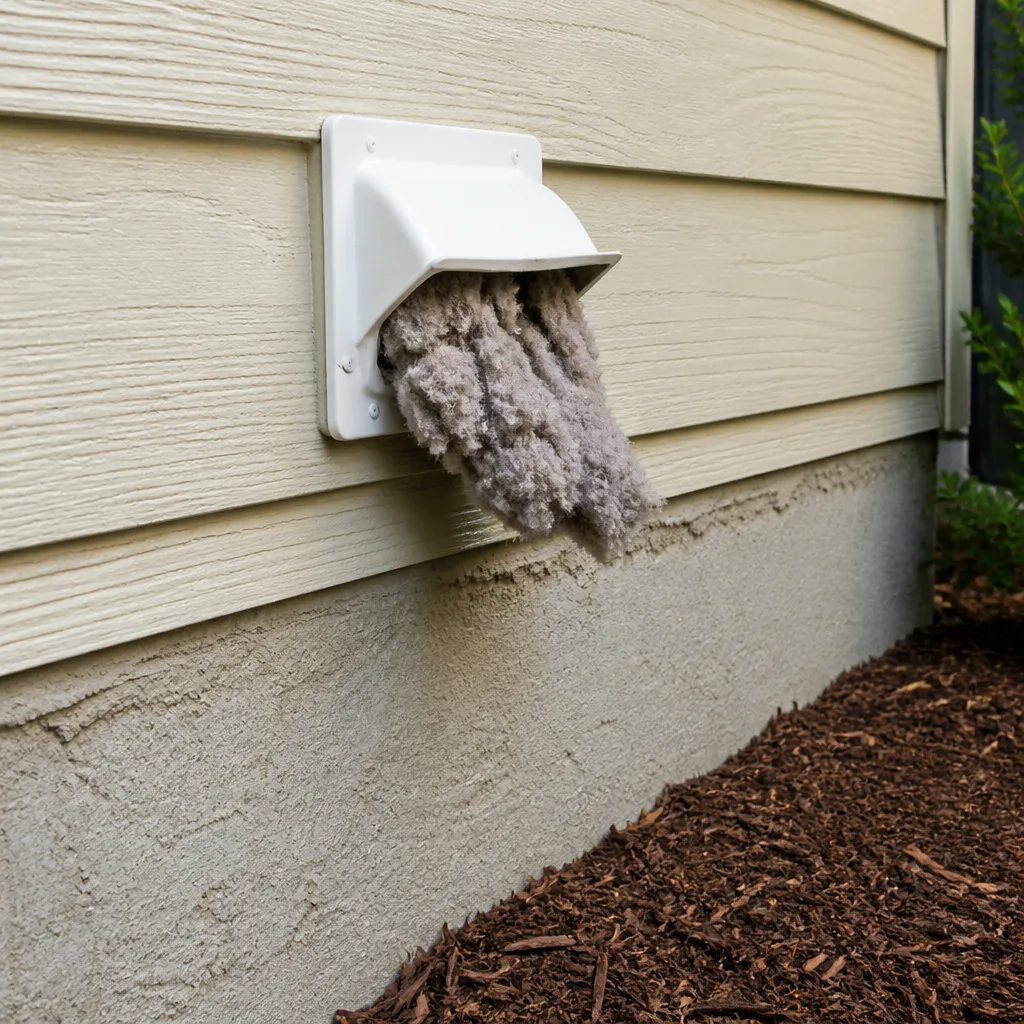 Dryer vent cleaning
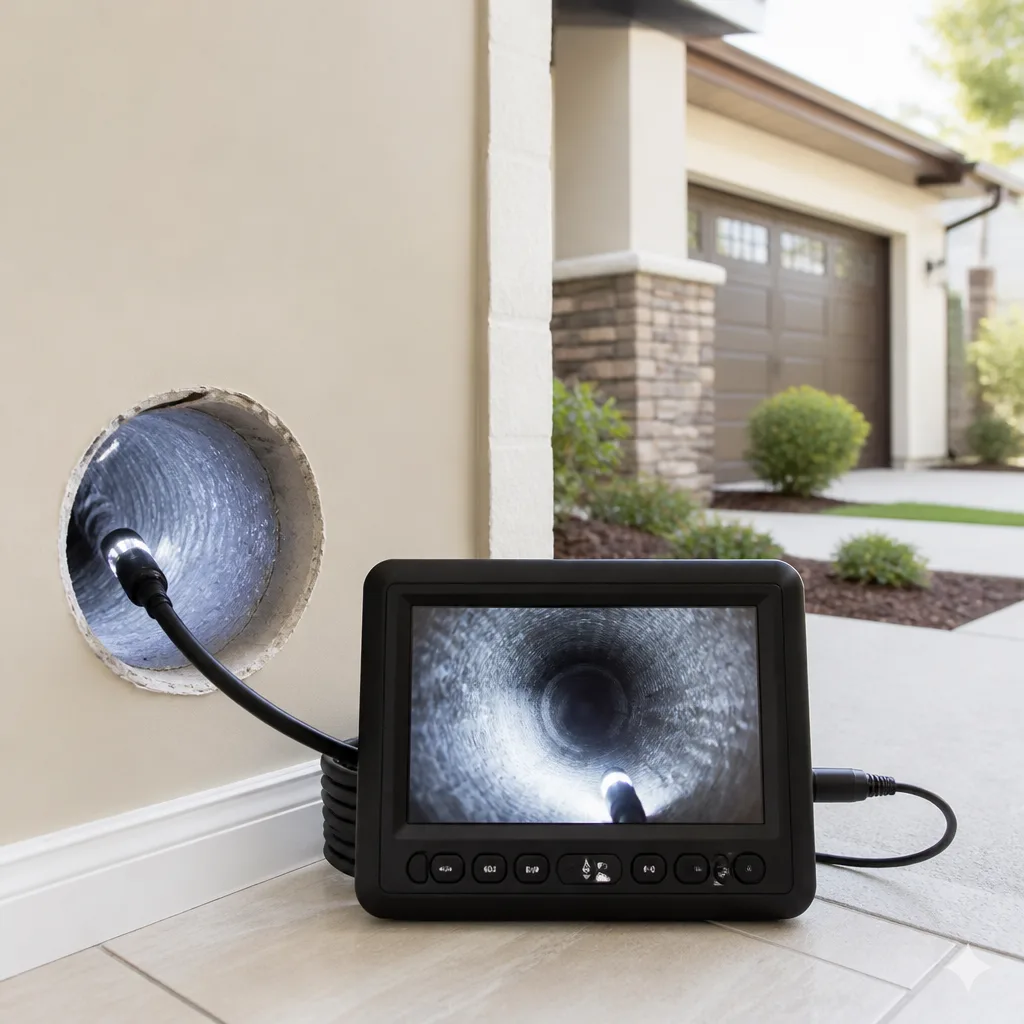 Camera inspection
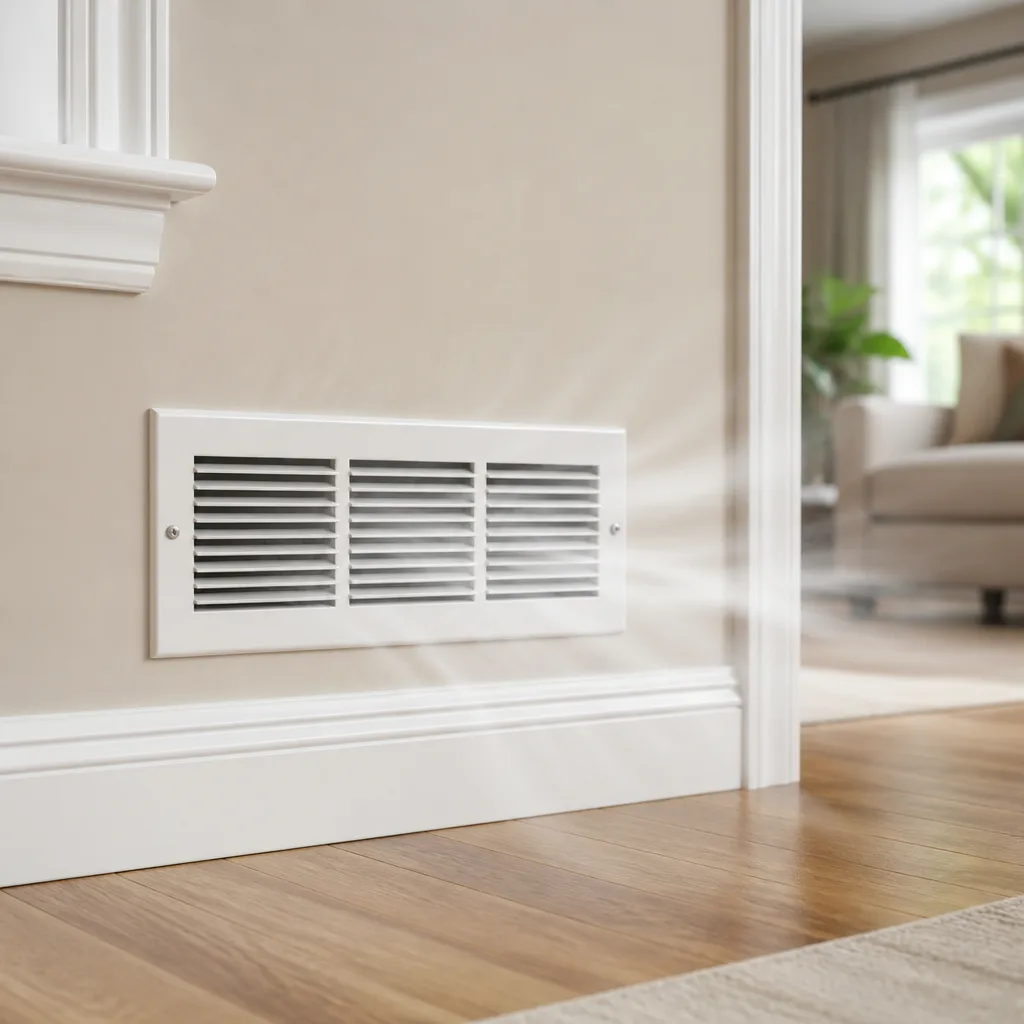 Sanitizing & deodorizing
Whole-system duct and dryer vent check with before-and-after photos - you see exactly what came out of your vents
That "$99 whole-house special" is a bait ad - the real number appears once they are in your hallway, or the "clean" is a shop-vac at the register. We photograph the inside of your ducts before and after instead.
How to Hire an Air Duct Cleaning Contractor in Hollywood: A Step-by-Step Guide
Most homeowners in Hollywood hire a duct cleaner the same way they hire a pizza: whoever quotes less and answers first. That’s the wrong instinct here. This is one of the few home services where the low bid often signals a shorter job, not a better deal, and where the EPA has publicly warned about operators who advertise a cheap whole-house special and then add hundreds of dollars in “treatments” once they’re inside. Florida’s density of HVAC service companies makes it an easy market to launch a van and a vacuum in. This guide teaches you the questions that separate a real contractor from a bait-and-switch, starting with the equipment spec.
Quick Answer
To hire an air duct cleaning contractor in Hollywood, verify three things before you book: the equipment (a contact-cleaning system like Rotobrush plus negative-pressure extraction, not a shop vac on a hose), a written scope of work with a flat whole-system price instead of a per-vent quote, and current state licensing through the Florida DBPR. Ask for before-and-after photos of your own ducts, and confirm the contractor also handles duct repair and dryer vent cleaning so one party is accountable for the whole system.
Styles & brands we work with
- Whole-home duct cleaning
- Dryer vent cleaning
- Camera inspection
- Sanitizing & deodorizing
Table of Contents
- Why Hollywood Homeowners Get Burned by Cheap Duct Cleaning
- Step 1: Ask About the Equipment Before You Book
- Step 2: Demand a Written Scope of Work
- Step 3: Learn the Red Flags in a Quote
- Step 4: Verify Florida Licensing Through the DBPR
- What NADCA Certification Actually Tells You
- Why Bundling Cleaning, Repair, and Dryer Vent Reduces Risk
- Step 5: Verify the Work Was Actually Done
Why Hollywood Homeowners Get Burned by Cheap Duct Cleaning
The air duct cleaning industry has a trust problem, and it’s not a rumor. The EPA has warned consumers directly about scam operators who advertise a low whole-house price, then pressure homeowners into hundreds of dollars of add-on “sanitizing” and “sealing” once the van is in the driveway. Florida’s service density makes it one of the easier places in the country for those operators to set up shop because there’s no shortage of homes that need the work.
Hollywood sits in a climate where the air conditioning runs most of the year and the house is closed up for much of it. That combination means dust, pollen, pet dander, and construction debris have nowhere to go but your return ducts and your filter. When a homeowner sees dust streaking from a supply register or notices allergy symptoms that won’t quit, there’s real motivation to call someone. Scam operators know that.
The pattern usually looks the same. A company advertises a number per vent or per house. A technician arrives, opens one register, shines a light in, and declares the system “much worse than expected.” The real invoice lands well above the advertised price, and the homeowner has no way to know whether the work changed anything. That’s why the vetting framework in this guide is built around what you can verify: the equipment, the scope, and the licensing. Reviews and license checks are a floor. They don’t tell you how the job actually gets done.
The good news is that the questions that separate a serious contractor from a van-and-vacuum outfit are not complicated. You just have to know to ask them before the estimate, not after.
Step 1: Ask About the Equipment Before You Book
The single most useful question in this whole process is: “What equipment will you use inside my ducts?” A serious answer names a system. A weak answer is “a truck-mounted vacuum” or “professional equipment,” which tells you nothing.
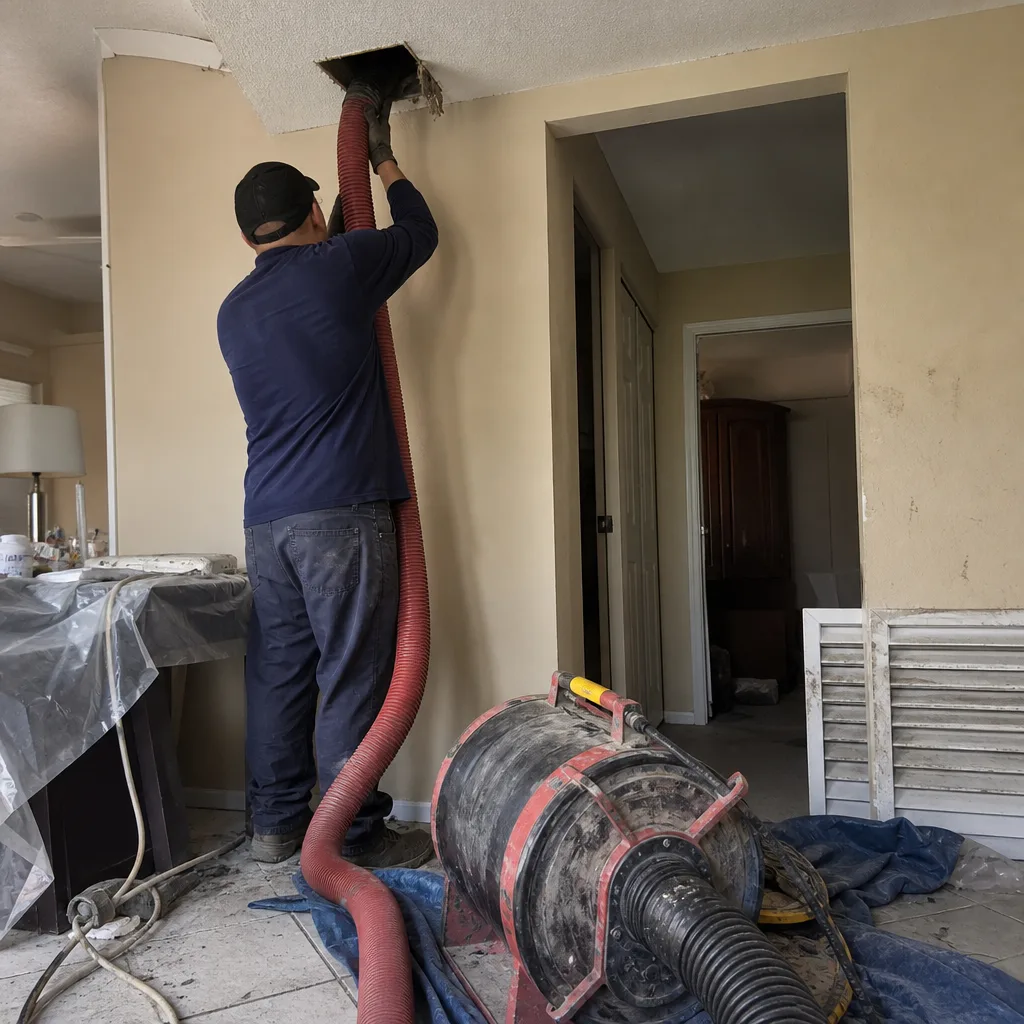
Here’s what to listen for. A contact-cleaning system, like the Rotobrush, uses a rotating brush and whip that physically agitates debris off the duct wall surface while extracting it. It works the surface instead of passing a suction wand through the opening and pulling only what happens to be loose. On a Miami-Dade or Broward duct system that’s been running since the house was built, the difference matters. Debris adheres to the walls, especially near the coil and in the return trunks.
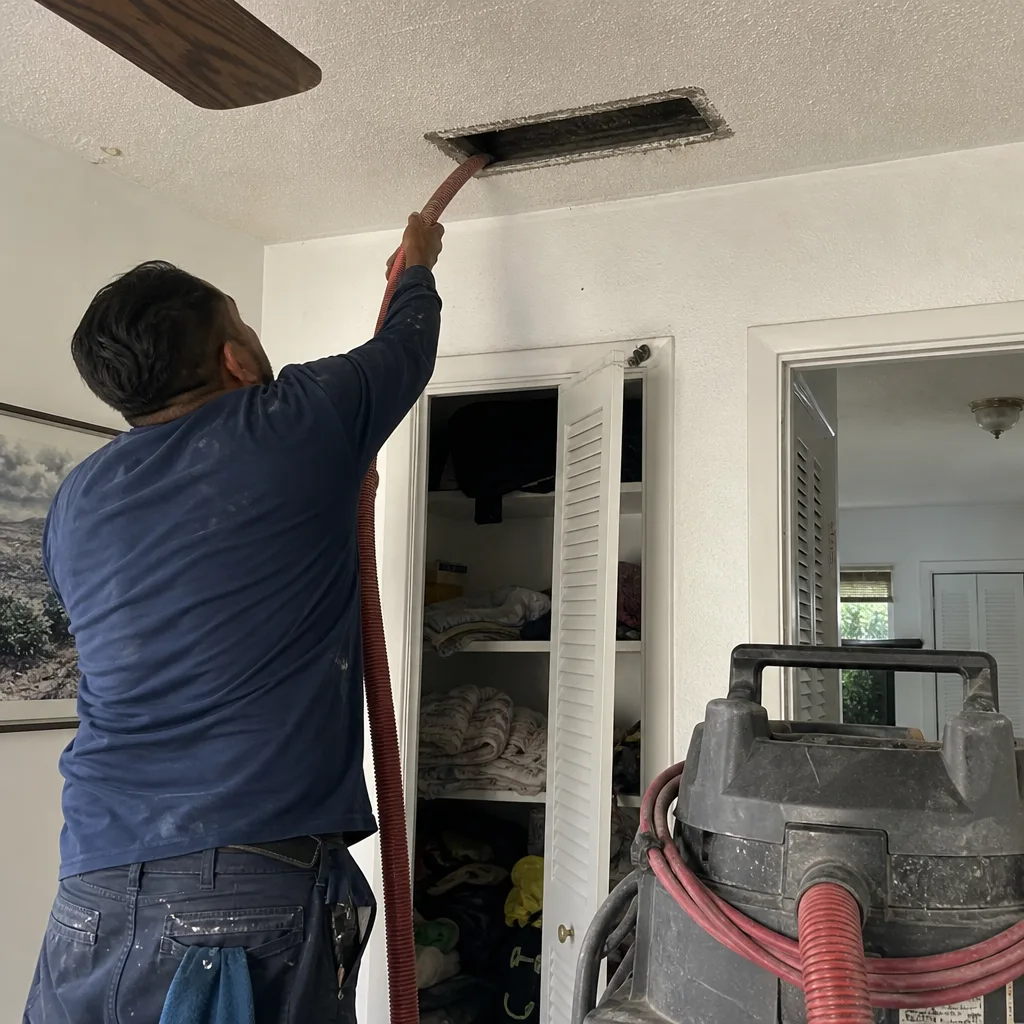
The second sign of a real setup is negative-pressure containment. A Nikro or comparable industrial vacuum keeps the system under negative pressure during the cleaning, so the debris dislodged from the walls is pulled into a HEPA filter or collection unit instead of recirculating through the room. If a contractor can’t explain containment, ask what stops the dislodged dust from blowing back into your living room. If the answer is vague, walk away.
A third signal is air-quality containment equipment of the sort used in professional abatement and indoor air quality work, like the Abatement Technologies line. That’s the class of tooling you want near anything that stirs up large amounts of dust in an occupied home.
Three equipment questions worth asking verbatim:
- “Do you use a contact-cleaning system like Rotobrush, or only a vacuum wand?”
- “How do you maintain negative pressure during the job, and what’s the vacuum model?”
- “Do you offer before-and-after camera photos of the ducts you cleaned?”
If a company answers all three with specifics, you’re already talking to a different tier of contractor than most of what advertises in the Hollywood market.
Step 2: Demand a Written Scope of Work
Price per vent is the leading tell of a low-bid operator. It rewards the contractor for counting vents quickly and doing the shortest possible pass on each one, and it gives no incentive to clean the trunk lines, the plenum, the air handler, or the coil area where the actual accumulation is. A whole-system flat price is the honest model, and it should come with a written scope of work that specifies exactly what’s included.
A proper written scope for an air duct cleaning job in Hollywood should list:
- Which portions of the system will be cleaned: all supply branches, all returns, the trunk lines, the plenum, and the air handler cabinet interior where accessible.
- The equipment to be used, by brand and method (contact cleaning plus negative-pressure extraction).
- Whether the coil and blower will be inspected and cleaned or simply inspected.
- Whether any duct repair is anticipated and whether that’s a separate line item.
- The complete price, in writing, before any work begins.
The written scope protects you in two ways. It anchors the conversation to what’s included before a technician is standing in your hallway with a flashlight, and it gives you a document to compare against a second bid. Ask each contractor for their scope in writing and compare them side by side, not just the number at the bottom.
If the scope is a single sentence, or if a contractor resists putting it in writing, that’s a signal you can’t ignore. Duct repair in particular needs to be scoped, because it’s the piece that cleaning alone can’t resolve. Compromised flex duct behind a soffit or a crushed run under a floor is not going to fix itself just because the line got vacuumed.
Step 3: Learn the Red Flags in a Quote
Most homeowners learn the red flags after the invoice. Here’s what to look for before you book, in one place:
- Per-vent pricing. A dollar-per-vent quote makes it easy to undercount or cut corners. Ask for a flat whole-system price.
- A very low teaser special. Whole-house specials that sound dramatically cheaper than every other bid are the calling card of bait-and-switch operators. The EPA has flagged exactly this pattern.
- No camera inspection offered. A contractor who can’t show you pictures of what’s inside isn’t going to be able to show you what changed.
- No written scope of work. If you can’t get the included items in writing, you don’t have a contract.
- High-pressure add-ons. Sanitizing, “sealing,” and “anti-microbial fogging” quoted on-site as must-dos are a common upsell. A legitimate contractor discusses those before the visit or not at all.
- No license available on request. Ask for the license number and how to look it up. A real operator answers without hesitation.
- No repair capability. A cleaning-only company will tell you cleaning will solve a duct problem that actually needs repair. Expect the contractor to be able to diagnose both.
Two of these deserve a little more context. The “no camera inspection” point matters because dust accumulation and duct damage can look similar from a grille. Compromised flex duct, disconnected runs, or a crushed section of sheet metal will show up on camera but not from a flash of a light. The “no repair capability” point matters because many return and supply problems are structural, not just dirty. The best cleaning in the world on a disconnected run doesn’t improve your air quality.
Step 4: Verify Florida Licensing Through the DBPR
Florida’s licensing picture for HVAC and duct work is not perfectly clean. Duct cleaning itself doesn’t have a single dedicated statewide license class in the way that, say, electrical work does, and the work often falls under a mechanical or HVAC contracting license depending on what’s being done. Cleaning and inspection are usually handled under general occupational licensing; duct repair that involves modifying or replacing portions of the HVAC system typically falls under a state-certified mechanical (Class A) or Class B HVAC contractor licensed through the Florida Department of Business and Professional Regulation.
Some operators hold no state HVAC license at all because they perform only cleaning and inspect no system modifications. That’s legal for the narrowest scope, but it’s a meaningful limitation if your ducts turn out to need repair or your dryer vent needs a replacement transition pipe. A contractor who brags about having no license isn’t a bargain, they’re a handoff waiting to happen.
What to actually do:
- Ask for the contractor’s license number and the category.
- Look it up yourself on the DBPR website. Any legitimate contractor will tell you to do this.
- Confirm the license is current and in the name of the company quoting the work, not a related entity.
- Ask what category the license covers and whether it permits duct repair, not only cleaning.
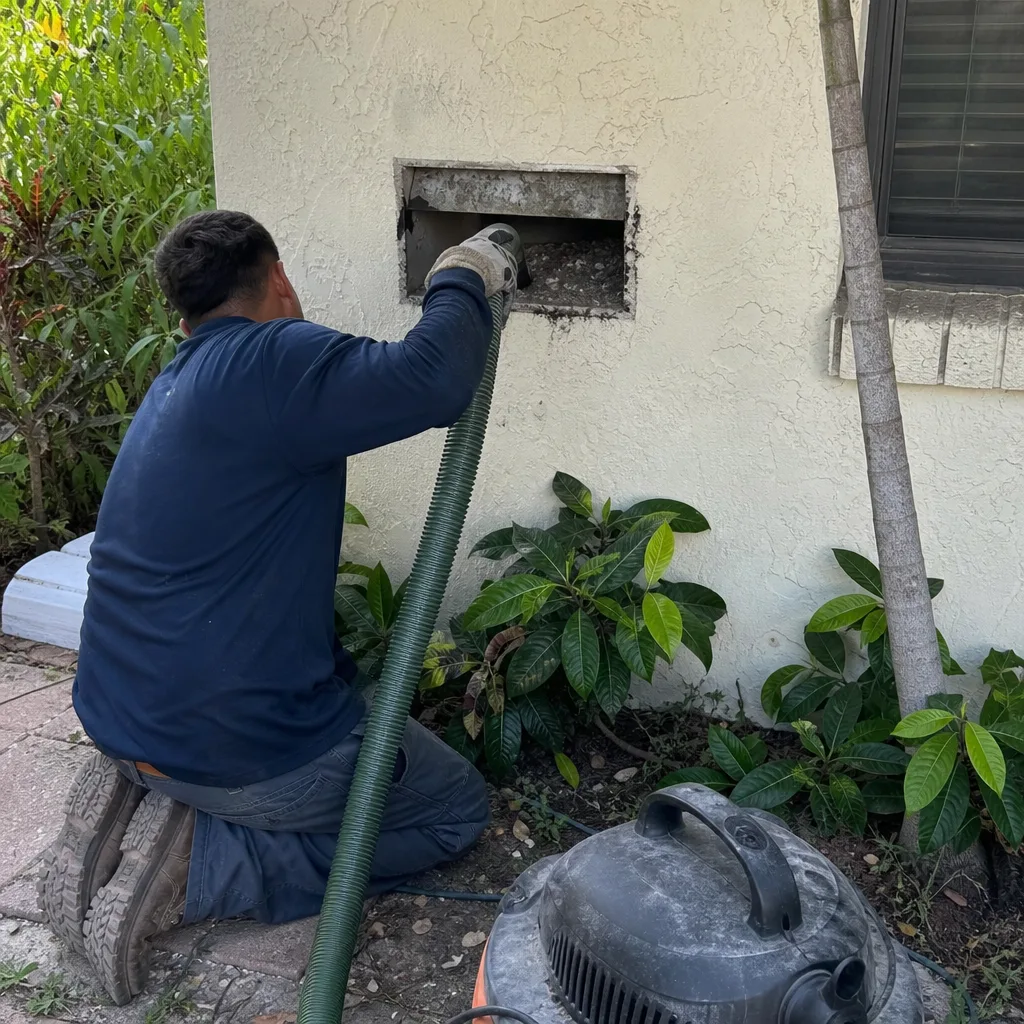
If the contractor offers dryer vent cleaning, also ask whether they’ll replace failed vent transitions and clean the exterior termination. A dryer vent that gets only a pass with a brush from outside may leave the lint cap and elbow completely untouched, and that’s the part that catches fire.
What NADCA Certification Actually Tells You
NADCA, the National Air Duct Cleaners Association, publishes the ACR standard (Assessment, Cleaning, and Restoration of HVAC systems) that most serious contractors work from. NADCA’s Certified Ventilation Inspector (CVI) and Air Systems Cleaning Specialist (ASCS) credentials are meaningful signals that the individual has been tested on the standard and understands the assessment and cleaning process.
What they don’t tell you: what equipment the company will actually put in your ducts. A crew can hold ASCS credentials and still run a light vacuum-only pass if the job is priced that way. That’s why certification is a floor, not a ceiling. It tells you the person doing the work has been trained on the industry’s own standard. It doesn’t tell you whether the job included contact cleaning of the duct wall or not.
A useful pairing:
- Certification tells you the contractor knows the ACR standard and the assessment process.
- Equipment evidence tells you the job will be done to that standard in your house.
Ask about both. A contractor who can name their NADCA credentials and the model of the contact-cleaning system in their van is the person you want. A contractor who has ASCS letters after their name but can’t describe the contact-cleaning system is a maybe. A contractor who has neither is a no.
There’s also a company-level version of this question: is the business a NADCA member, and is it in good standing? That’s a one-button check on the NADCA website. Ask a Hollywood duct cleaning contractor for the company’s membership status, and then look it up.
Why Bundling Cleaning, Repair, and Dryer Vent Reduces Risk
Three separate vendors creates three separate handoffs. Cleaning doesn’t know what the repair finding is. The repair contractor doesn’t know what the vent condition is. The dryer vent contractor doesn’t care about a duct that’s crushed in the attic. When something goes wrong later, every vendor has a reason it isn’t their fault.
One contractor doing all three closes that gap. If the inspection during cleaning turns up a disconnected flex run, the same company can scope the repair instead of telling you to call someone else. If the return trunk is undersized and the system is starved for airflow, the repair assessment happens in the same visit as the cleaning. If the dryer vent is crushed and lint is piling up at a failed connection, the same contractor documents it.
This is where the equipment standard matters, too. A company that does all three services is also a company that has to be able to price and scope a repair, which means they’ve thought about how duct systems fail, not just how to clean one. That separates a serious operator from a van that only owns a vacuum.
When you compare bids, look at what each contractor can cover. Cleaning only? One box. Cleaning plus air duct repair diagnosis? Two boxes. Cleaning plus repair plus dryer vent with a documented fire risk assessment? Three boxes. The three-box bid is going to be the one that gives you a single point of accountability from assessment through cleanup.
Step 5: Verify the Work Was Actually Done
The final step most homeowners skip is proof. The most common complaint in this industry isn’t that the ducts got dirty again; it’s that the homeowner has no idea whether the ducts were ever cleaned at all. A contractor who can’t show you the work shouldn’t be paid for it.
Ask for three things at the end of the job:
- Before-and-after camera photos of your own ducts. Not stock photos, not photos of “a system we did last month.” Your address, your registers.
- A written report of what was found and what was cleaned. Including anything the technician flagged for repair, and anything they recommend you watch (coil condition, vent connections, filter type).
- A clear invoice matching the written scope. If the scope said one price and the invoice says another, that’s a conversation.
Some contractors run a camera probe before and after each job and can show you the trunk line from the plenum to the farthest supply. That’s the standard to expect. If you can’t get pictures of what was actually inside your system and what changed, you got a cleaning in name only.
Take the camera photos seriously. Compare the trunk lines, not just the visible supply openings. A clean grille doesn’t mean a clean system. The dirt accumulates upstream of the register, at the trunk and near the air handler, and that’s where the photos need to focus.
Common Mistakes to Avoid
- Choosing on price alone. The lowest quote in Hollywood is often the shortest job. Compare equipment and written scope, not just the number at the bottom of an estimate.
- Booking a per-vent quote. Per-vent pricing rewards fast counting and light cleaning. Insist on a flat whole-system price with the scope spelled out.
- Skipping the equipment question. “Professional equipment” could mean a Rotobrush and a Nikro extraction unit, or it could mean a shop vac and a hose. Make them name it.
- Paying for a “sanitizer” or “anti-microbial fog” without asking why. These add-ons are the most common bait-and-switch upsell on the invoice. Ask what’s growing in the ducts, how they know, and whether the same result comes from a proper contact clean.
- Forgetting the dryer vent. The dryer vent is the highest actual risk in the house when it fails. Cleaning the air ducts but leaving a lint-packed dryer vent is a half-solve.
- Accepting “no camera” verification. A contractor who can’t show you photos of the work in your own ducts is asking you to take the work on faith.
- Not checking the license yourself. Asking for the license number is a good first step. Looking it up on the Florida DBPR site is the actual verification.
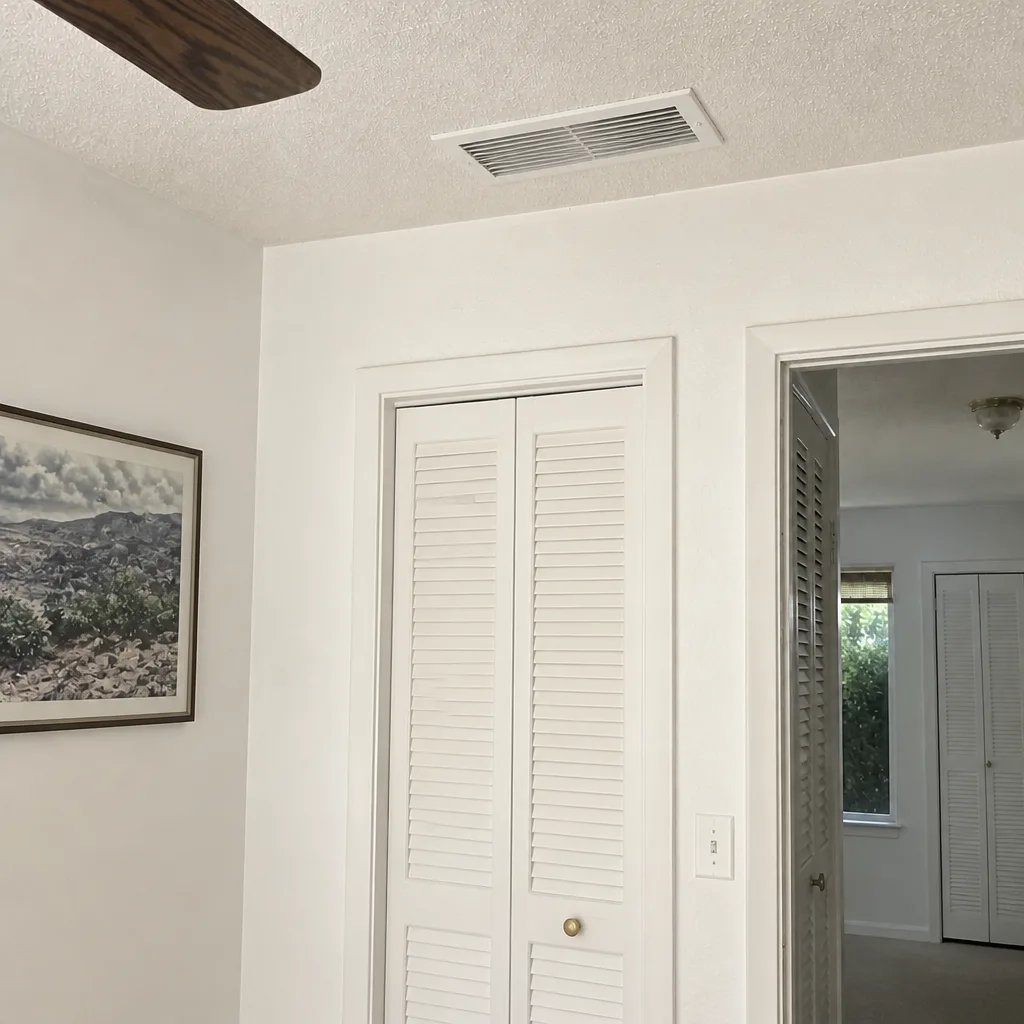
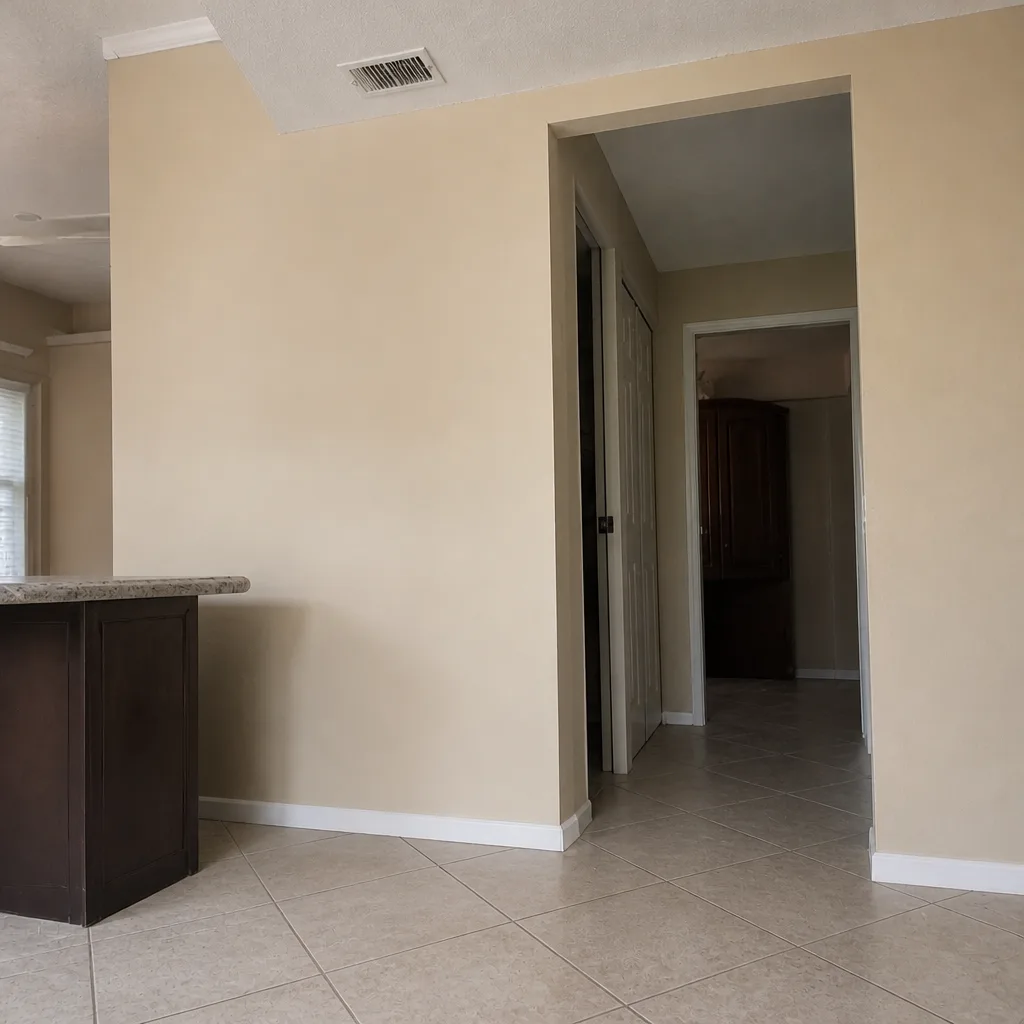
See the difference
 Before
 After
 Before
 After
 Before
 After
When to Call a Professional
Some duct conditions call for a professional assessment rather than another filter change. If your supply registers show visible dust streaking, if you smell mustiness or a faint animal odor coming from a vent, if you’ve had recent water damage or a renovation with a lot of drywall dust, or if you bought the house in Hollywood and don’t know whether the ducts were ever cleaned, it’s time to call. The same goes for a dryer that takes noticeably longer to dry a load or gets hot to the touch, which points to a vent restriction that needs a professional look.
Hollywood Duct Cleaning offers free estimates in Hollywood. Call (866) 361-9843. We answer 24/7. Fast dispatch, 7am-7pm, Sunday through Friday.
Frequently Asked Questions
A typical whole-system air duct cleaning in the Hollywood area runs a few hundred dollars and up, priced per system rather than per vent. The written estimate sets the final price, and it should list what’s included so you’re not comparing a full-system clean against a surface pass. Call (866) 361-9843 for an exact quote. Estimates are free.
Because the job being quoted is usually much shorter. A low per-vent or whole-house teaser price typically buys a vacuum pass on the branches only, no contact cleaning of the walls, no trunk or plenum work, and no camera verification. The EPA has issued warnings specifically about this low-bid-then-upsell pattern. A serious quote will be flat-priced, scoped in writing, and built around a contact-cleaning system. Call (866) 361-9843 for a written estimate you can compare line by line.
Ask for before-and-after camera photos of your own ducts, taken at the trunk lines and near the air handler, plus a written report of what was found and cleaned. A contractor who uses camera inspection as part of the job can produce these. If you can’t get photos of your own system, you can’t verify the work. Call (866) 361-9843 to ask what documentation comes with each job.
The honest answer is that there’s no universal schedule. Indoor air quality professionals typically recommend cleaning when there’s a reason: visible debris discharging from the registers, a known contamination event like water damage or a renovation, a new home purchase where the history is unknown, or persistent allergy symptoms that don’t respond to filtration changes. A cleaner with a mediocre filter and light home-dust load may go longer than the standard line implies.
NADCA credentials mean the individual has been trained and tested on the ACR standard, the industry benchmark for assessment, cleaning, and restoration of HVAC systems. It confirms the contractor knows the standard. It doesn’t confirm what equipment will actually enter your ducts. Treat it as a useful floor for evaluation, then ask the equipment questions on top. Call (866) 361-9843 to ask which methods we use on every job.
We offer air duct repair as a standalone service and as part of the cleaning assessment, so a compromised run that’s crushed, disconnected, or failed at a joint can be scoped in the same visit as the cleaning. Duct cleaning can’t fix structural problems. If the ducts are damaged, the repair has to happen or the cleaning won’t deliver the airflow and air quality result. For a Hollywood duct cleaning evaluation that includes repair assessment, call (866) 361-9843.
The Bottom Line
The Hollywood duct cleaning market rewards a buyer who asks good questions. Verify the license yourself through the Florida DBPR and confirm the category covers repair, not just cleaning. Verify the equipment by name: Rotobrush for contact cleaning, Nikro or an equivalent industrial unit for negative-pressure containment, and Abatement Technologies-class containment equipment on the job. Insist on a flat whole-system price with a written scope instead of a per-vent quote. Expect before-and-after photos of your own ducts. And favor a contractor who also handles duct repair and dryer vent cleaning, because a single accountable vendor closes the handoff gaps that let problems slip through. Our technicians have up to 14 years of experience, and we answer the same questions from Hollywood homeowners every week. The right contractor isn’t the cheapest one. It’s the one who can name the equipment they’ll use and put the scope in writing.
If you’re ready for a straight answer on your duct system, call Hollywood Duct Cleaning at (866) 361-9843 for a free estimate. We answer 24/7. Fast dispatch from 7am to 7pm, Sunday through Friday. We treat the estimate the same way we treat the job: written down, flat-priced, and verifiable.
Written by the team at Hollywood Duct Cleaning.